Saturday, June 17, 2023

Marx and Engels in the Prehispanic Caribbean

Several years ago, a Puerto Rican specialist in 19th century Hispanic Caribbean "Indianist" literature recommended the works of Francisco Moscoso. He specifically mentioned that we must read Tribu y clases en el Caribe antiguo. Foolishly, we scanned parts of that important book but then lost the file. The next best thing was to locate the English-language dissertation that was the basis of the book. "The Development of Tribal Society in the Caribbean" contains the essential points of the later monograph and is far more accessible. Reading it was a challenging and provocative experience as Moscoso sought to refute or problematize earlier Marxist and historical materialist interpretations of the Taino past. 

Perhaps the excessively lengthy first two chapters could have been reduced to a single chapter, although one sees their importance later on for Moscoso's deconstruction of Engels, Marx, and Morgan on primitive, communal societies to early class societies. Despite his occasional quoting of Marx, Engels, Mao, and Lenin, Moscoso was a little less dogmatic than we initially expected. By the end of the dissertation, Moscoso has made quite explicit his conclusions regarding burgeoning class formation through the tribute taken from commoners for the benefit of caciques. With the aid of nitainos, or clanlords, and behqiues (shamans and magico-religious specialists), the cacique, or chief, oversaw production, determined military actions, received tribute, and established a "semi-theocratic" system in which cemis and religious practices were linked to the chiefdom. 

By rejecting ecological determinism and interpretations by Caribbean archaeologists or historians that ignored or downplayed elements of incipient class formation, Moscoso forcefully argues that the Taino chiefdoms represented a tribal-tributary mode of production en route to class society. The Taino past is charted from prehistoric hunter-gatherer bands in Venezuela to the various cultures and migrations from the South American littoral to the Greater Antilles. Over several millennia, agriculture, ceramics, seafaring, and differentiation of producers and non-producers culminated in the chiefdom. Using comparative data from other chiefdoms, Moscoso offers some possible explanations for the rise of the system while rejecting Engels on the rise of classes. Instead of slavery as the immediate successor to primitive communal bands, the tribal-tributary model was a more likely intermediate step which can be seen in the case of the Taino. The Taino system, to him, would have likely developed into a despotic-tributary state as found among some other indigenous societies of the Americas had it not been for the Spanish conquest. 

The specific evidence for the tributary system allegedly established by the caciques of the Greater Antilles can be traced in archaeology, religion, the encomienda system, and the Spanish chroniclers. Since Las Casas, Oviedo and early colonial sources mention the control of labor, storehouses, and the high status of caciques and nitainos who were not engaged in production, one can surmise that there was ample surplus among the polities for greater differentiation and division of labor. The caciques benefited the most from this process since they received a part of this surplus, monopolized higher quality cassava bread, dressed distinctly, and were, based on the encomienda system, presumably incorporated into it for their control of the labor of commoners. From the cacicazgo of Xaragua, for instance, we find evidence of the great wealth and accumulation of goods and power achieved by caciques on the eve of the Spanish conquest. Puerto Rico, through Agueybana as paramount chief, was said to have been similarly powerful. Since we are lacking sufficient information for islands other than Hispaniola and Puerto Rico, Moscoso admits to varying degrees of development of chiefdoms, possibly a dimension of Tainoness as a spectrum of cultures with shared elements. Certainly, the Spanish chroniclers saw a general shared culture in the Greater Antilles and chiefdoms across the region.

Additional evidence of the incipient formation of classes can be found in the ruling ideology of Taino society reflecting the superior status and wealth of the cacique. The areytos, for instance, usually recorded the gests and genealogies of chiefs, indicating that the most important history to the Taino was that of the ruling segment of society. The storage of cemis in the caney or house of the chief, and the role of the cacique as intermediary between a cemi and the community through cohoba rituals likewise reflects the role of the religion in buttressing political authority. Whether or not calling this semi-theocratic or by some other nomenclature is helpful is beyond us, but clearly religion, areytos, and even redistributive feasts came to justifying an order in which some exploited the labor of others, even without the existence of private property. Such a phenomenon was also noted for parts of precolonial Africa by the South African Marxist, Bernard Magubane. The Taino case appears to have been similar, although the Antillean cosmovision may have reflected certain South American perspectivist influences and beliefs not entirely encapsulated in a Marxist analysis. 

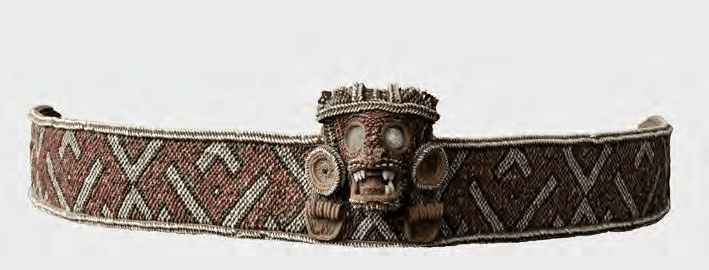
Overall, this unapologetic Marxist analysis of the Taino cacicazgo raises a number of fascinating questions on the nature of the "state" in the precolonial Caribbean and Caribbean societal formation. However, drawing upon other examples of indigenous societies in the Americas, such as the Iroquois and northern South American societies, raises a number of unanswerable or unknown issues. Were the ritual belts used by caciques, for example, also records of information, like wampum belts? Or, to draw from the classic 19th century histories, to what extent can Nau's claim of communal labor as tribute to the caciques of Hispaniola really be verified for, say, the Bahamas? Furthermore, more recent archaeologists seem to be less certain about the degree of centralization and the size of cacicazgos in Haiti and Puerto Rico. Is heterarchy, rather than hierarchy, what we should be looking for in the Antilles? If so, how does that challenge this Marxist analysis of the Antillean cacique?

Friday, June 16, 2023

Cave of the Jagua


Antonio Stevens-Arroyo's Cave of the Jagua: The Mythological World of the Taínos is an essential read for its creative approach to reconstructing the religion and mythology of the indigenous peoples of the Greater Antilles. Building on Arrom's reconstruction and analysis of the Relación acerca de las antigüedades de los indios, Stevens-Arroyo brings a new approach inspired by Lévi-Strauss's structuralism and comparative religious studies. This method, which can fill in the gaps of the Relación through identifying likely missing elements, may not always lead to a correct conclusion. Thus, we may disagree with him on the origin of the caney coming from the turtle that grew out of Deminan's back or the relationship between Guahayona and Guabonito. But, the possible advantages of this approach can outweigh the risks by filling in the lost or missing details of the Relación.

For example, a comparative approach with related South American indigenous peoples and even global mythology and religion reveals the ways in which Taino religion relied on analogical thinking, dualism of the Fruitful and Inversion spirits, and was part of a larger cosmovision reflecting their insular environment. Moreover, the possible identification of particular cemis in Taino art across Hispaniola and Puerto Rico serves as additional evidence that the Relación reflected the beliefs of more Taino groups than the ones Fray Ramón Pané lived amongst. Of course, one would have to follow more recent publications in Taino Studies to see to what extent the theoretical model proposed here has been supported by the evidence across the Greater Antilles. Perhaps, for example, Stevens-Arroyo is inaccurate in referring to the Taino chiefdoms as reaching a "harvesting economy" stage. Or the characterization of cacical authority may have been modified by later research on the nature of authority and the role of the cacique system and the cemi. Of course, it does seem clear that cacique and cemi were linked, the cacique probably did have something to do with the Sun, guanin, and the rise of greater social divisions with chiefly political leaders, behique shamans, an upper class and the laboring masses. Through the journey of the hero, Guahayona, one can see mythological explanations for the social order of cacical authority. 

We suspect that the denseness of the text and the references to Lévi-Strauss, Jungian psychoanalysis or complex religious and anthropological vocabulary may scare potential readers of this book. It is unfortunate, since it is likely that some elements of Taino religion have survived to this day in the Cuba, Puerto Rico, and the Dominican Republic. Stevens-Arroyo has not presented the strongest evidence of this in terms of Haiti and Afro-Caribbean religions because Maya Deren seems to have been the main source on Vodou, but it is probable that some indigenous elements survive in Spanish Caribbean popular religion. A comparative approach with African and Afro-Caribbean religious traditions might be necessary, however, to ascertain the degree to which Taino elements have persisted. The so-called Black Caribs might represent an interesting group for comparison of the other two systems, as it fuses elements of Island Carib (and probably Taino) elements with African-derived traditions. If done well, an analysis of that nature might reveal more clearly the distinct indigenous traditions that have survived. It could also shed light on popular culture, the Trickster, and whether or not the cultural hero of popular Caribbean society is more of an extrovert, introvert (Deminan) or centrovert (Guahayona).

Thursday, June 15, 2023

Nau and the Caciques of Haiti

Emile Nau’s Histoire des Caciques d'Haiti is justifiably a classic. As elucidated by Francisco Moscoso, the 19th century classic text, despite rarely sharing its sources, presents a compelling historical narrative on the European conquest of the island of Haiti. It is less of a history of precolonial Taino cacicazgos of the island than a harrowing tale of their subjugation and disintegration under colonial rule. Since Nau was part of a literary and intellectual movement espousing Haitian cultural nationalism, he felt it necessary to include the history of the aboriginal Haitians as part of this project. Interestingly, his brother, Ignace, also wrote several nouvelles which reflect a similar Haitian cultural project, albeit one that is more rooted in the African-derived cultural influences and practices of the Haitian countryside of the 19th century. 

That said, it is interesting to recall Ignace Nau’s tale of the rustic monteros of the east, and the fact that the eastern part of the island was once part of Haiti. Moreover, some of the ancestors of today’s Dominicans were considered to have “Indien” or indigenous ancestry. Perhaps claiming the Amerindian past as Haitians was linked to this larger conception of the island’s shared history? Indeed, Nau’s introduction suggests that it was through the fraternal links of suffering enslavement and colonialism that the African and Indian were joined together. Maybe Nau’s Romantic depiction of the indigenous past, one in which the “simple” Indiens were en route to civilization and, in the case of Xaragua, refined and skilled in poetry, was tied to the literary movement of the 1830s, in which Haitian authors sought to use poems and short stories to valorize the land and its diverse peoples?

We know Nau also, despite denying any biological continuity between Haitians and the exterminated indigenous population, also sought to identify Amerindian traits in aspects of Haitian popular culture and language. Such an attempt to do so may be part of this movement to define Haitianite broadly, with Amerindian, African, and European elements. The Taino elements, particularly in poetry, song, and language (deduced to be beautiful by the specimens of the Taino tongue resurrected by Nau, which proves that they were a refined people!) could be reimagined as part of the cultural patrimony of all Haitians. Maybe such a move would also be a common ground for Haitians of all backgrounds to unite, through the landscape, history, literary legacy, and eventual vengeance of the Taino through Haitian independence. 

Unfortunately, due to the time period it was composed and some of the ideological currents and limitations of Haitian Romanticism, Nau’s history presents a number of problems. The author’s admiration for Colombus as a thwarted genius representing science, religion and progress partially undermines the sympathy for the indigenes of Haiti. If Columbus and the Spanish conquest represented a giant leap in terms of expanding Christianity and civilization, and the Indiens were, outside of Xaragua, savages like the Caribs, simple, and lacking effective leaders, then there is a sense of inevitability in their extinction. Naturally, Nau opposed the subjugation by force and outright enslavement and exploitation of aboriginal Haitians. But this is sometimes contradicted by the fulsome praise for Colombus and the three ideals of Christianity, Civilization and Progress represented by European expansion. In other words, Nau was not quite ready to completely discard the Eurocentrism of his intellectual era. He could recognize that the Taino were on the path to civilization, however. La Yaguana or Yaguana, the capital of Xaragua, was said to have had over 1000 houses, which would likely mean it was a town or city with thousands of people. Their “tributary” system of government was able to generate enough resources for caciques and a leisurely class to develop, albeit not yet reaching the level of the Indiens of Mexico and Peru. Unfortunately, the tragedy of history was against them as Spanish expansion preempted fuller development of their societies.

Despite some of its ideological flaws and unclear sources (Charlevoix, Herrera, Las Casas, maybe Oviedo and Irving are some of the few we could identify), Nau’s account is full of interesting allusions to caciques and historical junctures that parallel those of the Haitian Revolution. The capture of Caonabo, for instance, brings to mind the trap used against Toussaint Louverture during the Haitian Revolution. Henry, or Enriquillo, whose refusal to submit for several years, must have reminded Nau and his readers of the familiar maroons of Saint-Domingue. Perhaps even a figure like Goman, who led a long-lasting rebellion against the Republic could be seen as a 19th century equivalent? Or, perhaps more obviously, the Bahoruco maroons of the colonial period who used the same territory of Enriquillo to resist the French. Of course, Nau also explicitly compares Ovando to Rochambeau for his brutality.

Indeed, Ovando’s unprovoked massacre of Xaragua’s elite and execution of Anacaona is surely matched by Rochambeau’s barbaric violence. These parallels must have been rather explicit to Nau, and would have been obvious to him as his brother also wrote short stories of episodes of the Haitian Revolution. Moreover, the magisterial tomes of Madiou and works by other Haitian historians would have facilitated the identification of similar episodes and themes in the history of Indian resistance and the struggle for Haitian independence. Doing so confirms a teleology in which the conquest and destruction of Indian Haiti is avenged through Haiti’s singular struggle for abolition of slavery and restoration of independence. Haiti, under Dessalines, achieved what was impossible for Enriquillo. 

Wednesday, June 14, 2023

Hispaniola: Caribbean Chiefdoms in the Age of Columbus

Although I was expecting a much lengthier tome on the Taino sociopolitical system before and during contact with Europeans, Wilson's Hispaniola: Caribbean Chiefdoms in the Age of Columbus is a good reminder and review of the 'ethnohistorical' sources on the indigenes of Hispaniola. As Wilson states in his conclusion, Hispaniola set the framework for European-Native relations throughout the Americas, so a keen understanding of the Arawak peoples and their decimation by European colonialism is important to study. Moreover, Wilson's text is a succinct overview of scholarship and writings on the Taino from the 1490s to the 1980s, providing archaeological and ethnohistorical sources in order to show the complexities of indigenous 'sociopolitical' systems on Hispaniola, the island of the Greater Antilles where the Taino polities were probably the most complex. From Columbus making contact on the northern coast of Hispaniola (modern Haiti) to the campaigns in the Vega Real, to the Adelantado's contact with Xaragua and the eventual subjugation of the entire island in a tribute system, it becomes quite clear that Hispaniola featured the most complex Taino societies, with larger villages, fine craft production of ritual goods (zemis and dujos, seemingly produced by women), and linguistic diversity.

Wilson also does an excellent job recreating Columbus's first and second voyages and how European perceptions of the Taino political system were filtered through early modern European notions of feudal kingship, Christianity, and gender norms (the practice of polygyny among the Taino elite and the alleged power of women caciques in Hispaniola & Puerto Rico certainly stood out, as well as women's general nudity). Moreover, the complexities of cacicazgos in Hispaniola from 1492 to the early 1500s are well detailed (though I would have liked more info about cacique Mayobanex and the peoples of Samana who were labelled 'cannibals' and ethnic diversity on the island). Likewise, what exactly happened with Behecchio and Anacaona was an interesting example of how some caciques were able to play off Spanish renegades to undermine the Adelantado (Columbus's brother, who represented Spanish 'rule' in Hispaniola) for a decade. The nuances of Taino inheritance among the elite also seems unclear, perhaps being a combination of patrilineal and matrilineal.

Unfortunately, we all know how the tale of indigenous peoples and political systems collapsed: disease, forced labor (for gold mining) that took cultivators away from their conucos (manioc cultivation as practiced by the Taino required constant maintenance and about a year for the crop to mature), population and food pressure to feed the growing European presence ravaged the indigenous population's autonomy and subsistence strategies. Even the strongest caciques fell over time, such as Guarionex, Anacaona, and Caonabo, due to Spanish treachery, warfare, and the killing of Taino elites. It's a shame the written sources are not detailed or sufficient enough to provide a clearer picture of how elite marriage structures and sociopolitical systems functioned (it seems like the caciques, even the strongest ones, were dominant firsts among equals rather than 'kings' or 'queens' in the European sense).

Also interesting for its relevance to European colonization in the Americas, Polynesia and parts of Africa, however, is the likely Taino perception of the Spanish as beings from the sky, as gods. Their vast caravels, horses, guns, metal weapons or tools and otherworldly appearance across the sea must have shaped Taino relations with the Spanish, just as it had done so in future decades with the Spanish conquest of the Aztecs in Mexico. If the European documents can be trusted, the capture of Caonabo as a result of tricking him with metal shackles (perceived as turey by the Taino, that is, objects from the sky or gods), demonstrates how early relations between the Taino and Europeans were shaped by the indigenous view of whites as supernatural beings, making outright war or resistance less likely.

Indeed, Wilson suggests that one of the reasons caciques like Behecchio and Anacaona may have hosted resplendent welcome feasts for the Adelantado and other Spanish leaders was due to their perceived godliness, which would explain the zemi rituals some caciques called for when visited by Europeans. The indigenous view of the bell (a bell in Isabela or one of the inland fortalezas) and other turey from Europe as divine objects clearly influenced trade relations, since the Europeans wanted gold (and later on, food) while the Taino were happy to take cheap objects of tin, thereby paving the way for an exploitative trade on unequal terms.

Last, but certainly not least, Wilson avoids providing a firm estimate for the number of people on Hispaniola in 1492, saying it was probably more than a million. Due to a number of reasons alluded to by Wilson, there is no way to arrive at an exact estimate, but what is known is the rapid decline of the Amerindian population by the 1520s. Hispaniola, as the center of Spanish expansion in the 'New World' from 1492 until the conquest of Mexico and the mainland, saw its indigenous population disappear by the middle of the 16th century and soon after, Spanish attention focused on more lucrative colonies in the hemisphere. It would seem that Anacaona and the cacicagzo of Xaragua (covering modern Haiti) was the last of the Taino sociopolitical systems to fall on the island, It's quite amazing to think how rapid the demographic decline of Hispaniola was under just a few decades of Spanish rule...

Tainos and Caribs: The Aboriginal Cultures of the Antilles

Robiou Lamarche's proposed myth-geography of our island.

Robiou Lamarche's Tainos and Caribs: The Aboriginal Cultures of the Antilles is perhaps best read in Spanish. The English translation seems to contain some errors, but is still worth the investment for anyone interested in a provocative interpretation of the indigenous Caribbean past. Drawing on the usual sources of ethnohistorians, archaeology, and a comparative approach to related and similar societies in northern South America, Robiou Lamarche proposes a number of fascinating theories on Taino and Carib cosmovision, astronomical knowledge, and cultural developments. By integrating the Caribs of the Lesser Antilles into the narrative, one also begins to see parallels between the two groups and how their legacy can be found today across the Caribbean. It is an epic history encompassing thousands of years of migration, cultural transformations and adaptation, culminating in the Taino chiefdoms of the Greater Antilles and the establishment of the Island-Caribs in the Lesser Antilles. The emphasis on religion and culture also gives a human face to the societies who, to a certain extent, are among our ancestors. 

Since one might reasonably worry about the dangers of relying too heavily on Fray Ramón Pané for understanding Taino religion and cosmology, Robiou Lamarche draws from art, petroglyphs, astronomy, and ethnographic research on related societies to expand our knowledge of the Taino world. Naturally, some of the conjectures remain very speculative due to the limitations of our sources. However, the advanced nautical skills of the indigenous Caribbean peoples and certain recurring motifs in their art suggest that Robiou Lamarche was correct about their cosmology reflecting a preoccupation with the Sun, Moon, stars, constellations, and its impact on the natural world. It would be only natural to suspect that the indigenous inhabitants of the Caribbean would organize their calendars, alignment of plazas, rituals, agricultural activities, and social practices around this astronomical observation of the stars, which could be related to the shifts in seasons, tides, animal life, or myths of origin in caves and belief in spirits. The finding of similar artifacts across the Greater Antilles attesting to similar ritual practices (such as cohoba ceremonies) suggest the cosmovision of the so-called Taino sketched by Pané may have been accurate beyond Hispaniola or Haiti. 

We only wish the chapters on Carib interactions with Europeans and Africans, as well as the legacy of the indigenous Caribbean population in the 21st century received a more detailed analysis. If, as stated in the text, the Caribs had been interacting with Europeans and Africans for over a century by the time of the 17th century French chroniclers began describing their societies, it would have been interesting to look for elements of African and European influence on the Caribs (and vice versa). The adoption of the sail, for instance, is an interesting example of technological transfer. But what about African or European influences on Carib religion or ritual? Are some of the similarities some claim to see between, say, Haitian Vodou and indigenous Caribbean religion, perhaps a product of the centuries-long interaction of the Caribs with Africans and not a sign of direct Carib or Taino influence in Haitian religion? The Island-Carib societies described by Robiou Lamarche would have been influenced by the European and African captives and assimilated persons living under their rule, composing perhaps 20% of their population. The indigenous legacy today also deserves more scrutiny beyond the elements of material culture that persisted across the centuries. But that would require oral history or analysis of popular religion in the Caribbean on a vast scale.