Friday, December 29, 2023

El uso de la incrustación en la escultura de los indios antillanos


Ricardo Alegria's El uso de la incrustación en la escultura de los indios antillanos covers a potentially important topic, but sadly does not take it anywhere. Essentially, it is quite similar to his work on ball courts and plazas but with fewer theories or conclusions. However, the study emphasizes how the Taino encrusted so many works of wood, cotton, stone and other materials that served utilitarian and ritual or ceremonial purposes. Some of these pieces were true masterpieces in indigenous Caribbean art, featuring gold, conch shells and other objects. The fact that gold and shell were usually used for teeth and eyes of idols, three-pointer cemis and other objects is undoubtedly significant, too. Why the mouth was filled in gold for some of the most elaborate duhos, for instance, must surely have some deeper meaning in the Taino worldview and culture. Unfortunately, Alegria does not delve into those questions here, but the number of cohoba holders, duhos and other objects that featured gold or shell encrustrations is suggestive of deeper meaning. The use of shell to represent teeth seems natural enough for anthropomorphic or zoomorphic idols and cemis, but gold for the mouth, eyes or ears might have associations with turey, and the divine realm. As for why the only remaining duho to still possess its original gold is its mouth may have been linked to the belief that the spiritual world could communicate in rituals. 

Thursday, December 28, 2023

Boyá and the Indigenous Population

One thing that has become exceedingly clear after reading Juan Daniel Balcácer's Enriquillo: historia y leyenda is that the legendary cacique did not die at the site of Boyá. When he passed away in 1535, the written sources describe his community as living near Bahoruco. Indeed, he may have been buried in Azua. A letter from 1547, cited by Balcácer, mentions the destruction of Enrique's pueblo by African maroons, after stating that these subjects of Enrique lived in the foothills of Bahoruco. In addition, a letter by Las Casas from 1534 describes Enrique's pueblo as about 7 leagues away from Azua. This does not sound like it would have been anywhere near Boyá in Monte Plata. However, what if the remnants of Enrique's community did move to the area of Boyá later on? While the survivors were said to be few, 8 or 10, perhaps they were joined by other survivors and then later joined by other indigenes of Hispaniola.

The evidence to support this theory is very thin. However, the rather detailed and perhaps elaborate Indian pueblo of Boyá described by Charlevoix does not strike one as entirely fictional. According to Charlevoix, the pueblo was headed by the self-titled "cacique of the island of Haiti." Supposedly, the bourgade attracted around 4000 Indians when first founded, which must be an exaggerated. However, according to a document he claimed to have seen, the population of the pueblo had dropped to 30 men and 50 or 60 women. Most of the subsequent scholars who described this community often repeated some or parts of Charlevoix's description, all agreeing that it was the town of Enrique's followers and last bastion of the island's native population. For an example of another French Jesuit who mentioned the pueblo, a short allusion to it was made in a letter by Fr. Margat from 1729. According to Margat, this small canton of indigenous people was unknown for a long time. Perhaps he meant unknown to the French, since Boyá was usually the only town of Indians mentioned in the 1600s and 1700s.

Rodriguez Demorizi's Relaciones Históricas De Santo Domingo is a priceless resource.

In addition to Charlevoix and Margat, one can also find early Spanish references to the town. One early reference to the community by Luis Geronimo Alcocer, was written in 1650. Already, in 1650, he wrote of a pueblo de indios "que oi no tiene seis vecinos."Intriguingly, Alcocer did not make any reference to Enrique, solely describing the town as the only place where Indians could be found. Elsewhere, fortunately, he offered an explanation for the town's depopulation. Apparently, several residents of the town had migrated elsewhere in the colony to search for work. Their community still had 6 houses and perhaps those who had left retained some tie to the community. If many of its vecinos had already left the pueblo for economic reasons by 1650, perhaps that is why the gender imbalance was so pronounced when Charlevoix wrote of the community in the 18th century. A somewhat later source, Domingo Fernandez Navarrete, also wrote about Boyá. According to him, in 1678, the town only had 2 Indians, both mixed-race (mestizo and castizo). 

Another Spanish source on the community can be found in a work by Domingo Pantaleon Alvarez de Abreu, written in 1740. According to this source, Boyá's population had 65 Indians and 11 slaves. So, the community included about 65 Indians in 1740, and about 80-90 adults according to Charlevoix. Perhaps due to the community's pattern of male outmigration, their numbers were in constant flux. According to Antonio Sanchez de Valverde, however, the community by the late 18th century only consisted of mestizos, some of whom descended from people from the mainland. This could be also related to the possible relocation of Indians from other parts of the Americas to Boyá. For example, Indians from Campeche or other indigenous peoples brought to the island by the French but intercepted or seized by the Spanish colonial authorities. Nevertheless, by 1785, the town only had 25 or 30 mestizos. 

The late 18th century brings us to Moreau de Saint-Méry, one of the most interesting on the question of Boyá and Enriquillo. While he mostly repeated what was already written on the subject by Charlevoix, something Thomas Madiou also did in the 19th century, he added a few new elements. First, he testified to the claims of indigenous ancestry by some of the mixed-race people in the Spanish colony. As Nau later observed, Dominicans, especially women, of certain features and long hair, were called indios. For our French observer, they also laid claim to aboriginal ancestry with pride. This is evidence for the longevity of the "indio" self-ascription among the mixed-race population in the Spanish Caribbean. Long before Trujillo and the conflicts between Haiti and the DR, some of the multiracial Creoles of the island called themselves Indians and claimed indigenous ancestry. Of course, Moreau de Saint-Méry saw them as people of mixed-race ancestry in which, for some, indigenous features could be occasionally observed. In addition, our author also claimed that several Indians in Banique successfully proved their descent from Enriquillo's subjects in 1744. While Banique, close to Hinche, is rather distant from Boyá, this anecdote could be a reflection of outmigration from the community, some of which reached Banique by this time. Unfortunately, there are no sources to corroborate this claim by Moreau de Saint-Méry. As for our pueblo of interest, he mostly restated past descriptions of the town, particularly those of Charlevoix and Sanchez Valverde.

After this brief review of some of our sources on the pueblo, what can one actually say about Enriquillo and Boyá? First, that the town was not associated with Enriquillo during his lifetime. If it has any connection with the followers of Enriquillo, it must have developed after the destruction of the original settlement. That said, the claim by Charlevoix that the town claimed a connection to Enriquillo may have had a kernel of truth. Since we do not know what happened to the survivors of the maroon attack that destroyed the original town, perhaps the survivors were resettled in the area of Boyá. Indeeed, perhaps Enriquillo's cousin or his wife, assuming they were still alive, had an opportunity to lead the community in the new town. Then, assuming Charlevoix was not entirely incorrect, other indigenous people of the island may have been resettled in Boyá, boosting its population. This theory, while not verifiable with sources, may explain why so many writers associated Boyá with Enriquillo. Alternatively, it is possible the founders of Boyá invited the survivors of Enriquillo's community and sought to use them to ensure legal protections and privileges from the government. Regardless of how and under what conditions the connections were made, the claim by Moreau de Saint-Méry that people claiming descent from Enriquillo's subjects were found in Banique, near Hinche, if true, provides evidence that his followers may have reconstituted themselves at Boyá. Then, dispersing to make a living, some reached Banique. While these Indians described by Moreau de Saint-Méry may have also been motivated by legal protections and the honor attached to Enriquillo, their success in convincing the colonial authorities must have relied on some strong evidence, perhaps origins in Boyá. 

Legend and History of Haiti's Last Cacique

Juan Daniel Balcácer's Enriquillo: historia y leyenda is a fascinating read on the "last cacique of Haiti. A person admired and commemorated by Dominicans and Haitians alike, Enrique's rebellion inspired nationalist movements among both peoples. The reality, however, was rather different from the legend we have constructed. While undoubtedly an important figure and one whose alzamiento inspired resistance among Africans and Indians during his lifetime, including indigenous people in other islands, such as Cuba, the actual history of Enrique is a more ambivalent legacy. By highlighting the actual history of Enrique from what can be verified with written sources, what emerges is a complex figure who merged aspects of Spanish and Taino culture. 

His resistance, sparked by personal abuse and affronts from his encomendero, only transformed into a long-lasting alzamiento in the Bahoruco region after he failed to find justice through the colonial system. However, once peace was accorded in 1533, Enrique agreed to police the countryside in order to hunt runaway Indians and Africans. In exchange for having a recognized community of his own close followers, not too far from the Bahoruco (and not the Boya near Monte Plata, as many of us have erroneously assumed), Enrique clearly agreed to cooperate with the brutal, dehumanizing systems of the encomienda and chattel slavery. Indeed, according to a letter from 1547, included in the text, the community founded by Enrique was actually destroyed by African maroons, who had a score to settle with them. This implies that the community was probably supporting the Spanish by spying on and fighting African runaways in Bahoruco after Enrique died in 1535. The very same primary sources included in the appendix of the text also allude to cultural survival of aspects of Taino culture. For example, the areitos were very much still observed in 1547, much to the chagrin of the Spanish. Indeed, the survival of areitos was believed to also be one of the reasons non-Christian religious practices were revived or maintained. One wonders to what extent Enrique's community maintained these practices, despite their leader's Catholicism and the meeting with Las Casas in which Tamayo was baptized. 

In light of Enrique's past as someone who, despite suffering from the massacre of Jaragua's elite ordered by Ovando, was raised and educated by Christians and therefore at least partially Hispanicized, his collaboration with the colonial system is perhaps not too surprising. However, this collaboration, which involved defending the very same system that other Indians and Africans continued to resist, makes it difficult to justify the legends of Enrique as a liberator who fought for the freedom of  Indians, an end to colonialism, and emancipation for Africans. The reality, based at least on the documents and Spanish chroniclers, was closer to Enrique acting in his own interests and only for those of his community. His resistance movement, however, was costly for the Spanish crown and inspired other Indians to flee to the mountainous areas. Nonetheless, their resistance was not unified and perhaps this was due to Enrique coming from the acculturated Taino elite, one that had been pacified or destroyed in the conquest and, in some cases, reared in Spanish culture. Other Indian rebels of Hispaniola, such as African maroons, may have been more likely to have desired an end to the encomiendas and slavery. However, it is interesting to note, as mentioned by Pichardo Moya's study of Cuba's Indians, how some Indian rebels of Guama were recorded in 1533 as hoping for Enrique's arrival. Perhaps the immediate legacy and influence of Enrique was to inspire other communities to resist, even after he made peace with the colonizers when Francisco de Barrionuevo met him. Indeed, if the letter written by Enrique is any indication, it is possible he truly saw himself as a worthy vassal of the Emperor and accepted Spanish rule.

Due to the aforementioned collaborationist agreement of Enrique, Balcácer finds the legends created around him to be worthy of historical criticism. Despite the numerous places named after him and literary tributes to Enrique, the legends have masked the reality of an "Hispanicized" Indian who, ultimately, only fought to secure his own community's survival. The fact that they were later destroyed by runaway Africans further illustrates the complex rivalries and conflicts that prevented unification of the oppressed majority of the island's population. Indeed, the ultimate destruction of Enrique's pueblo by Africans makes it interesting to see Haitian nationalist legends about Enrique. Whatever African-Indian collaboration in marronage that occurred, Enrique was probably far from exemplifying. It is lamentable for us Haitians due to Enrique's kinship with Anacaona and the fact that his wife, Mencia, was said to be a granddaughter of Anacaona. As much as we would like for things to have been different, the legend of Enrique at least helps both Haitians and Dominicans claim deeper, precolonial roots. Like so many protagonists in our legends, the real Enrique was far more complex and contradictory than one would like. Nevertheless, let us hope that his tomb is one day found in Azua and he continues to receive our admiration for the longevity of his movement that inspired others to combat colonial oppression. 

Wednesday, December 27, 2023

Jiguani's Church in 1801


The church of San Pablo in Jiguani, Cuba, as it looked in 1801. The pueblo was one of the Indian communities in Cuba, although only founded in 1701. Sadly, PARES does not have more digitized records of this community.

Tuesday, December 26, 2023

Indios Macurijes


It is astonishing to us that there were Macurije Indians of Cuba who were not subjugated until 1576. While their ultimate fate is not clear, they were presumably forced to labor for Cristobal Sotolongo after he encountered and relocated them from their hideout. This reminds us of similar references in Hispaniola to Indians residing in hidden spots of the mountains and hills to escape colonial rule and exploitation. PARES is a priceless resource. 

Indios Naturales de Haiti


While randomly perusing PARES, we encountered more documents that allude to indigenous communities surviving in Hispaniola after 1550. One document, from 1555, mentioned 3 or 4 different hidden communities of Indians native to the island. One of them was apparently in the the area of today's Haiti. Another was located in Samana and the one located in "Aguayo" was probably in the area once associated with the Ciguayo Indians, perhaps. The last one mentioned with a specific location was located near Puerto Plata. Indeed, it was this one, where a white man named Villapando seized people. Villapando, looking for runaway Africans, must have been surprised to find a community of native people. Apparently, the government knew little about these hidden communities and there could have been more than 4, since unknown communities of were said to exist in Cabo Tiburon. While the government called for Villapando to let those Tainos seized from the pueblo near Puerto Plata go free, the fate of these communities is unknown. Given the fact that Indians were still secretly enslaved or sold in nearby Puerto Rico and the similar complaints of labor shortages from Santo Domingo, one would expect that Tainos seized from these communities were forced to provide labor in the colonial settlements. A few, perhaps in the more remote areas such as Cabo Tiburon, may have been able to resist longer.


We know that in 1563, hidden communities of Indians were still suspected on the island. One priest even went to the trouble of searching for them in the mountains and hills of Hispaniola. They were said to be in Aguayo, Cape San Nicholas, and Cabo Tiburon, again areas where indigenous people were hiding in 1555. The priest, Francisco Juan de Ortega, was tasked with trying to convince them to move to areas where it would be easier for the Church to convert them. However, by promising them they would not have to serve any Spaniards, Ortega was mistreated by the whites and faced opposition from them. How long these indios naturales were able to resist Spanish attempts to control their labor is unknown. In 1571, when Lopez de Velasco's Geografía y descripción universal de las Indias was published, he wrote that Hispaniola only had 2 pueblos de indios with a population of 50. However, his sources may have been outdated or incomplete. And if his reports of depopulated towns such as Yaquimo were correct, it is possible indigenous people were able to remain hidden in parts of the island like Cabo Tiburon. 


Despite the paucity of details, the survival of indigenous communities into the 2nd half of the 16th century challenges the theory of Taino extinction. Similarly, the fact that the Church was, at least on paper, expressing great concern over their religious salvation, suggests that indigenous religious practices were still maintained. The fact that they had to be promised protection from the abuse of the Spanish certainly supports the contention of scholars like Guitar and certain Taino revivalists. The colonial government was unable to actually know how many indigenous people were on the island and they also had motives to lie or minimize it when they illegally enslaved or abused them. In addition, "indios naturales" also appear in the archive for the 17th century. Indeed, we have a record of Ignacio Dominguez, indio natural of Santo Domingo, returning to the island in 1621. While it is possible his parents were not natives of the island, the evidence overall supports Taino survival.

Monday, December 25, 2023

Indios in 1550


As pointed out by many modern historians since Salvador Brau, Indians did not disappear from Puerto Rico. One reference to them can be found in a letter from Governor Vallejo to the Crown on PARES, mentioning how some Indians were still secretly sold and treated like slaves in the colony. This is interesting since Charles V had already outlawed Indian slavery. When it was implemented in Puerto Rico, according to Brau, in 1544, only 70 native Indians of the island were found and freed. Undoubtedly, this was an undercount as some vecinos of the island hid their Indians. Even Vallejo himself, in another letter from August 1550, mentioned a monastery run by the Dominican order that possessed black and Indian labor. There were also indios on the island of Mona, supposedly devout Christians. At some point, a pueblo called Cibuco was also established with indios (mentioned by Lopez Velasco). References to "indios" in Arecibo as well as Quebrada de Doña Catalina in the 1560s certainly suggests Indians, both native and foreign, were still around.

What is most intriguing about the December 14, 1550 letter is the hints it provides about the Indians of Puerto Rico. The complete letter, for instance, mentions the superstitions of the Indians and discusses the need to ensure their instruction in the Catholic faith. Thus, Vallejo seems to be in support of Indians remaining with an amo, provided they are paid for their labor, dressed and receive religious instruction. Indeed, it was better to leave them with white employers than risk them joining the negros or persisting in their religious errors. Indeed, why separate them from their owners and risk them turning into vagabonds? Moreover, Vallejo described them as "liviana" and "supersticiosa" people who liked to join blacks. This letter, despite its brevity, nonetheless indicates Spanish elite fears of African and Indian collaboration.

El Inca Garcilaso de la Vega's Royal Commentaries


El Inca Garcilaso de la Vega's Comentarios Reales de los Incas has long been on the reading list. Using the translation of Maria Jolas, based on the annotated French edition of Alain Gheerbrant, provides easy access to one of the major sources on the Inca. This blog's ongoing obsession with the past of the indigenous peoples of the Caribbean has, of course, led us to South America. Although the Andean civilizations of South America were very distinct from the Taino, it is interesting to read about other cultures in precolonial South America. In addition, references to the Inca emperors during the final stage of the Haitian Revolution, perhaps due to the mistaken belief that the indigenes of the island originally came from Peru, has always sparked a desire to learn more about the Inca. Of course, the Taino were not from Peru. But one must wonder why the idea was influential enough on Dessalines and how the memory of a great indigenous empire in South America may have shaped him.

But let us return to El Inca Garcilaso de la Vega. A mestizo born to a mother from the Inca royal family and a Spanish conqueror, he was part of both worlds. However, his desire to portray Inca civilization as a great, peaceful society in which the rulers were, with the exception of Atahualpa the usurper, expanding the empire through persuasion and eradicated sinful customs like human sacrifice, idolatry and sodomy, is contradicted by other sources. And due to his devout Catholicism and Spanish heritage, El Inca Garcilaso also sought to justify the Spanish conquest since it spread the light of the Gospel. That said, the great Inca civilization, radiating from Cuzco, a city he compared to Rome, was almost preparing Peru for Christianity. The Incas, believing themselves to descend from the Sun when their first ruler, Manco Capac appeared, promoted the worship of the Sun and attempted to end the idolatries and human sacrifices committed by various subject peoples. In addition, their wondrous roads, monuments, palaces, promotion of a uniform language, and spread of their culture through state-directed migration and provincial administrators and vassals assimilated into Cuzco's culture and rituals suggest Peru was a "civilized" land of peace, laws, justice and equality. 

Clearly, El Inca Garcilaso de la Vega exaggerated a little bit and downplayed customs of the Inca that were abhorrent to European or Christian perspectives. Furthermore, he relied on oral traditions passed down from his mother's family, sources from one camp of the Inca elite and likely to have promoted a vision of their past as benevolent, excellent rulers. According to this narrative, the Incas, the sons of the Sun, consistently expanded their empire (often through peaceful means), built wondrous palaces and temples to the Sun, and established an orderly society in which everyone received their subsistence. This version of the history of the Inca rulers did not completely omit setbacks and internal discord. Occasionally, some of the more "savage" Indians on the frontiers of the Empire rebelled, dissimulated or resisted conquest. But overall, until the conflict over the throne between Atahualpa and Huascar, the Inca rulers were almost invariably great, just, lovers of the poor, conquerors, and able administrators. Thus, one must be cautious with El Inca Garcilaso's portrayal of the 12 Inca rulers.

Despite the aforementioned limitations of his work, his Royal Commentaries are nonetheless a major source of information on a major indigenous civilization from within (or, partly internal). His detailed references to the khipu, for instance, reveal how knots could be used so skillfully to record numbers for imperial administration. At other points in the text, he mentioned the use of quipus to record a speech of Atahualpa in Cajamarca. Elsewhere quipu and those trained in their use could also use them to record history, a process not fully explained by our mestizo historian. According to him, quipucamayoc learned, via oral tradition and memorization, how to record speeches, events, and historical narratives that they sometimes recited to curacas and Inca rulers. Consequently, khipu must have served a function besides counting people or supplies for administrative purposes. Exactly how, for example, were khipu used to record speeches is unknown. Perhaps it was truly through oral traditions and the use of quipu as a mnemonic device that allowed them to be used for recording narrative? It is a pity El Inca Garcilaso de la Vega left Peru without learning more about this topic. His royal connections and ties to those closer to Inca traditions could have potentially elucidated khipu to him and enriched his historical reconstruction of the Inca past. That would have resulted in a history that went beyond earlier chronicles written after the conquest or the traditions and stories passed down from his mother's family. 

Besides the overview of the Inca rulers, El Inca's account also includes some interesting reports, legends, and traditions of maritime expeditions and visitors across the sea. One of the Inca rulers, according to Sarmiento, even left for a maritime expedition of 9 months from the coast of modern Ecuador. Topa Inca Yupanqui supposedly returned after the discovery of the islands of Auachumbi and Ninjachumbi. He also brought back "black" men, gold and a copper chain. The annotated edition of the text suggests this Inca ruler may have reached Easter Island. However, the references to gold, copper, and "black" men are somewhat uncertain. Did the Inca ruler really travel with 20,000 people on balsas specifically constructed for a Pacific voyage? The traditions as reported by Sarmiento are surprisingly detailed but include mention of "horse" bones brought back to Cuzco. Since the Inca were, according to El Inca Garcilaso, unfamiliar with and amazed by horses when they encountered the Spanish, surely it must have been some other type of animal. What to make of the gold and brass chair is also unclear, but the "black" people may have been Melanesians? Of course, El Inca Garcilaso's earlier comments about fishing and ships suggest "rudimentary" shipbuilding technology and very little seafaring beyond a short distance from the coast. But coastal populations later subjected by the Inca could have had provided the skills, labor and technology for a large-scale Inca expedition into the Pacific. After all, genetic evidence of contact between populations related to indigenous peoples of Colombia and those in Polynesia hint at contacts, which could have included navigational and sailing knowledge. El Inca Garcilaso even reported a legend about "giants" from across the sea with beards and long hair who stayed on the coast in the distant past. Last but certainly not least, one of the late Inca emperors may have even plotted to conquer as far north as what is now Colombia's Caribbean coast, perhaps illustrating Inca knowledge of the Pacific and Atlantic. 

As for why the Inca of all indigenous civilizations, appealed to Dessalines, who even associated the Indigenous Army with them, a number of theories have been proposed. Since El Inca Garcilaso de la Vega had been available in French and other pro-independence movements had drew from his work and the history of the Incas, perhaps the Haitians were also recalling the past of a grand indigenous empire that, going by El Inca Garcilaso de la Vega's analysis, was an advanced state that administered its territories well. The quasi-utopian society described by the Peruvian probably influenced Dessalines through his educated secretaries and supporters. As proposed by Geggus, perhaps the theory of a Peruvian origin of the Taino that was in a novel published during the Haitian Revolution also contributed to the fascination with the Inca among the Taino. 

Sunday, December 24, 2023

Patterns and Designs


While appreciating some of the brilliant pieces of polychrome ceramics produced in ancient Puerto Rico, included in Mela Pons Alegria's book on Saladoid ceramics, we could not help but notice certain patterns and designs that recur in later Taino art. While some of these similarities may be explained by recurring patterns and geometric designs influenced by hallucinations, others suggest deeply rooted practices and aesthetics that were likely inherited by the later "Taino" civilization. The above piece, a rather remarkable decorative plate with 3 circles, each one with a distinctive central circle within. The circles are organized along a line and each one appears to have what may be legs, perhaps something akin to a frog?

The similar arrangement of 3 circles along a line was a frequent motif in Taino duhos, or stools. While the stools were produced centuries later, the fact that the back often had the similar design of 3 circles is likely significant. Perhaps the 3 circles, representing the Sun, Moon, and horizon, signified the cosmos that was supporting a Taino cacique? The above example, from Hispaniola and reproduced in Arrom's careful study of Taino art and mythology, is one of the best examples of the pinnacle reached by duho sculptures. Other pieces with even more elaborate backs included intricate panel designs with faces. Indeed, the pattern of 3 circles on high-backed duhos can even be seen in stone stools found in Puerto Rico and some of the stools from the Bahamas.


Undoubtedly, the similar designs on duhos from Hispaniola, Puerto Rico and the Bahamas points to some degree of common culture and cultural exchange. In addition, if women were the potters among the Saladoid culture in ancient Puerto Rico as well as the producers of some of these elaborate duhos, as suggested by Pieter Martyr d'Anghiera for the case of Xaragua in Haiti, perhaps female artisans inherited some of the same designs and applied it to a different medium, wood and stone. For instance, one can see stylistic similarities in the faces of anthropomorphic and animal figures in stone trigonolith cemis from Puerto Rico and wooden duhos from Hispaniola. This suggests that the artists of these works were competent with stone, wood and possibly ceramics or pottery. Granted our evidence for women producers of duhos is only available for the inhabitants of La Gonave, but it is suggestive of a possible deeply rooted tradition of circular patterns from pottery adjusted to duhos. 


Thus, in our minds, the consistent pattern of 3 circles on high-backed duhos from 3 different island cultures that shared the "mosaic" of Tainoness points to trade and common origins. The pattern of the 3 circles must have held some deep meaning, which the ancient Hacienda Grande decorative plate may have shared. As mentioned previously, it likely had religious relevance and could have been tied to a common cosmovision. We know the Sun was important in the Taino cosmovision, and perhaps the 3 circles symbolized the stars? Alternatively, the Hacienda Grande pot features what may be legs, perhaps an allusion to frogs or another animal associated with life. In addition, the designs might symbolize life if the squatting position are associated with frogs, water, and birth. 


The remarkable continuity of motifs and styles across different mediums like pottery, stone and wooden sculpture strongly suggest cultural continuity and exchange in Hispaniola, Puerto Rico and the Bahamas. The deeply rooted Saladoid tradition must have influenced subsequent cultural development, particularly in Puerto Rico and the Dominican Republic. Unfortunately, we have not seen more examples of ceramics and sculpture from the Hacienda Grande and other cultures of Puerto Rico.


Our theory, of course, is pure speculation. But it does suggest some possible antiquity to aesthetic styles found on the ornate duhos of Puerto Rico, Hispaniola and the Bahamas. That the symbol was found on the more elaborate of stools, associated with caciques and cohoba ceremonies, one must assume its frequency was related to the Taino cosmovision and spirituality. Despite the several centuries separating the elegant Hacienda Grande pottery and the later duhos, one might see elements of later "Taino" beliefs reflected in their art. 

Wednesday, December 20, 2023

The Cacique of Yunque

A legend of the mountain peak, Cacique, quoted in full by Fewkes in The Aborigines of Porto Rico and Neighboring Islands, is said to represent Indian retentions in Puerto Rican folklore. Indeed, according to Fewkes, the folklore of the peasantry in Puerto Rico and the Dominican Republic was a rich area of research into Indian cultural survival in the region. While the jibaros living in the region of Yunque are not described in any ethnographic detail by Fewkes, the legend, first recorded by "Federico Vall y Spinosa" in a San Juan newspaper, may indeed represent a fragment of Indian belief or traditions. 

In the case of this modern legend, the mountain peak called El Cacique is said to have what is considered a cave. Popular legend or tradition claims this area was once inhabited by King Cacique, who ruled the northern coast of the island in the days when spirits wandered the land. Through a deal from the devil, or El Enemigo, he was later trapped in the cave at the peak of El Cacique, with his wife and daughter. This story includes supernatural events such as the flight of the the cacique and the devil to the mountain peak, where the former is trapped by the latter. The moral of this story seems to be a warning to avoid those who seek to distract one from one's path or labor, which the cacique failed to do this one time. However, trapped in the mountain cave, he at least received the company of his wife and daughter. The daughter, a princess, escaped through a hole in the cave and received honey from a man named Juan. Later, when the devil discovered this, he tried to close the aperture but compromised, allowing the princess to, one day per year, talk to a Juan on the feast day of Saint John. 

The above legend clearly features elements drawn from Catholic and perhaps European folklore. The "Indian" element, however, seems significant due to the ritual importance of caves in Taino mythology and legends. This cacique or King Cacique appears to have lived in some distant past when spirits still wandered the earth, or before historic times. However, his daughter was able to interact with a man named Juan, suggesting the legend probably should be considered to describe conditions in the 16th century. The devil, represented by El Enemigo, and the moral of the story, seems to be rather Christian in nature, too. Nonetheless, the fact that the king is considered a cacique trapped in a cave could be representing, through a Christianized peasant understanding, how the devil (perhaps a cemi) had misguided the Indian leader into a sinful path. Consequently, the chief was trapped in the cave and could not escape. His daughter, however, one day per year, gets to speak and this legend might explain why some heard voices (or what they considered voices) speaking from this cave. 

So, while this legend may reflect Indian traditions, it's probably an example of a Christian interpretation of Taino religion. Since we know caves were important in Taino mythology and sometimes the site of rituals, the fact that King Cacique was led by the El Enemigo is probably an example of a Christian interpretation of the cemis as demonic entities corrupting Indian life. Intriguingly, another traveler who visited Cacique in the 1800s also wrote about a "Cueva de los Indios."In 1870, Jose Maria Gutierrez de Alba's Apuntes de Viaje de San Juan de Puerto Rico a la sierra de Luquillo was published. Although not reporting legends of the jibaros in the area, he described a certain cave of the Indians, possibly the El Cacique peak. On page 25, he wrote, 

Habíanme asegurado con toda la buena fé del mundo, que en aquella cueva encontraría restos muy notables de antigüedades indias, que sus paredes conservaban aun gravadas ciertas figuras alegóricas que 'nadie podia descifrar ; que al rededor de la gruta, había asientos tallados en la roca, donde sin duda los habitantes primitivos debían celebrar sus misteriosas asambleas, y por último, que hasta hallaría restos de sepulcros de aquella época remota, que no podrían menos de darme alguna luz sobre una dé las manifestaciones que mas carácter suelen tener, entre los pueblos salvajes.

However, upon investigation of the cave, he found no evidence of Indian artifacts or human presence. However, knowing what we know of caves as important, sacred places in Taino mythology, and that Taino artifacts were discovered by peasants in caves, the legend of the King Cacique and his daughter may have been inspired by similar cave sites elsewhere in Puerto Rico. Sites with evidence of petroglyphs, seats or duhos, sculptures and other finds. Indeed, according to Fewkes, peasants in Puerto Rico associated Indian cave pictographs with gods or spirits, suggesting that peasants viewed the cave site at El Cacique as a similar abode for spirits. Thus, the actual Taino religion, by this time long gone except for elements that merged with European and African traditions, was an influence on peasant folklore in a way that both maintained and demonized aspects of indigenous belief. 

Monday, December 18, 2023

The Jibaro Inheritance


Although Jose Colomban Rosario's 1935 MA thesis, The Development of the Puerto Rican Jibaro and his Present Attitude Towards Society is rather dated and relies on a problematic framework, it is actually a worthwhile read for strong legacy of the indigenous peoples of the island. Despite viewing the jibaro as a problem in need of solutions for Puerto Rico to achieve true progress, there are number of interesting observations on the historical development of the jibaro to support the theory of significant Amerindian (cultural) survivals. While the author often neglects or treats the African inheritance as an afterthought among the jibaro and he occasionally posits that the jibaro is mainly of Spanish "racial" stock, there are even allusions to indigenous phenotypical features and miscegenation that suggest the jibaro culture was very much an "Indian-Spanish" one with African influences.

First, the biological and cultural inheritance. Rosario alludes to the 1530 de Lando census's enumeration of 14 vecinos who were married to Indian women. Of course, there must have been a far higher number of Spanish males involved with Indian women as concubines due to the paucity of European and African women in those days in the colony. Evidence such as the mestiza heir of Antonio Sedeño also suggests that many mestizo children were born in the first century of the colony. These mestizos, in addition to indigenous survivors of the colonial conquest wars and encomienda system, bequeathed much of their culture (and genes) to what later emerged as the Puerto Rican people. Africans, according to the occasionally racist perspective of Rosario, who often quotes extensively from Bryan Edwards, were less influential due to their low status as slaves and their quick assimilation into this "Indian-Spanish" hybrid culture. Colonial society, with the decline and imperial neglect of the later 1500s and the remainder of the colonial period, saw the spread of the population across the island in isolated patterns with Spanish settlers (and their descendants) adopting Indian customs and practices of domestic architecture, agriculture, musical instrumentation and other aspects of material culture. Indeed, a jibaro bohio without hammocks, music without guiro and maracas and the use of the machete to serve the same function as the coa of the Taino was rather rare. 

Intriguingly, yucca was not a major staple of the jibaro diet. Instead of yucca and the old Taino casabe, the jibaro as encountered by Rosario was more likely to rely on rice, beans, green bananas, codfish, sweet potato and yams with only rare consumption of meat or eggs. In this respect, the jibaro diet was probably less nutritious than that of their indigenous forebears, despite the addition of European domesticates in the island. The high rates of disease, lack of medical care, insufficient diet, and low wages and lack of land ownership ensured the jibaro family operated at subsistence levels. In temrs of family structure and relations between the sexes, the jibaro practice of concubinage may also, in part, stem from indigenous influences. While the Spanish and African inheritance also included concubinage and polygamy, the relatively wealthy jibaro with a woman or two on the side may also be a product of their indigenous ancesetry. After all, caciques and some nitainos had multiple wives. In addition, records from the encomienda era point to Indian men at the Real Hacienda de Toa who had more than one woman as a sexual partner and marriage was not widely practiced. This same feature was noted among the jibaro by Rosario, as consensual marriages were still very common. 

In addition to the adoption of much of indigenous cultures and practices, actual biological descent from the indigenes was even remembered in oral traditions by some jibaros interviewed by Rosario. The father of one child in Utuado with conspicuous "Indian" features reported that the great-grandmother of the boy was an Indian woman from the mountains of Lares, seized by a Spaniard and having a number of "half-breed" children with him. Lares, not far from Maricao and other regions which were documented as having "Indians" as late as the early 19th century, when the boy's great-grandmother probably met the Spaniard, must have had a sizable population of "Indians" or people who considered themselves as such, to be remembered by jibaro descendants in the early decades of the 20th century. The jibaro man reporting this "Indian" ancestor was probably not alone. This means that perhaps many jibaro of that region of Puerto Rico remembered indigenous ancestry. Furthermore, Utuado was one of the regions of the island noted by Fewkes to possess a significant number of people with marked "Indian" features. This suggests that the tale of Indian ancestry reported by Rosario from one jibaro family was likely common among other jibaros of the region of Utuado, which combined with cultural survivals of the indigenous past, point to the significant "mestizo" element of jibaro origins. It is unfortunate that more oral traditions were not collected from jibaros of this region of the island to collect more family histories of Indian ancestry. Perhaps these oral traditions and folklore could have some bearing on our understanding of cultural identity, race, and popular culture in colonial Puerto Rico. 

While the indigenous legacy is most evident in the material culture of the jibaro, Rosario's study hints at possible legacies in religion and spirituality. The jibaro, for example, frequently consulted the spirits through mediums for cures or solutions to their problems. Of course, some of these practices also have European and African influences, but the Taino traditions of behiques, cemis and ritual healing likely influenced this. Similarly, Salvador Brau's report that the jibaro believed that spirits of the dead roamed the Earth at night could also be, in part, a remnant of Taino belief (despite obvious parallels with African and European beliefs and superstitions). Due to the promotion of Roman Catholicism by the colonial government for centuries, the official religion of most jibaros was Catholic. However, they rarely went to mass, lived isolation from churches, and seemed to associate religious celebrations of the saints with less pious festivities. Indeed, jibaros loved the celebrations on the feast days of particular saints, often providing time for dances, banquets, racing, "sinful profanities" and and celebrations. However, the celebration of the saints was possibly also a survival of Taino and Spanish religious practices. Instead of God, the jibaro prays to the saints for intercession and assistance. These saints may have replaced the cemi just as the Spanish traditions of venerating the saints undoubtedly influenced Puerto Rican Catholicism. In the Puerto Rican context, Rosario cites an interesting example from the colonial era that may reflect Indian-Spanish fusion of belief. In this case, festivities and masses for Saint Patrick were believed to protect yucca from worm infestations. The process in which this saint was chosen to protect the cassava from infestation was believed to be a miracle or result of divine intervention and was actually decided upon by the episcopate of the island. Nonetheless, in 1641, worms attacked the cassava crop after less than enthusiastic festivities for Saint Patrick, so a grand festival was held in his honor to protect the cassava. This anecdote from the 17th century possibly hints at a spiritual blending of ancient Taino and Spanish Catholic customs. We know from Hispaniola in the 1490s that some Taino used wooden images of Catholic saints to promote the growth of crops, an earlier instance of Taino adoption of the Catholic saints in their own framework. Perhaps the jibaro also believed that Saint Patrick required faithful veneration and tribute in order to earn his protection or assistance, a legacy of the indigenous past.

Last, but certainly not least, music and dance among the jibaro suggest indigenous survivals. Rosario quotes Manuel Alonso on the "Indian" features in the garabato dances. We already know that the guiro and maraca were of Indian origin. While the Spanish guitar, decima, and "African" cuatro and bailes de bomba were very much a part of musical culture, the Indian areito or areyto may have survived in the long dances of the jibaro. The Indian dances of the pre-Hispanic past were known to persist for several hours and to be associated with recording history of caciques and for major festivities. The jibaro dance similarly could last all night and could be associated with religious celebrations or secular purposes. The jibaro dance used some of the same instrumentation as those of the areyto and, according to Agustin Stahl, probably represents a remnant of the areito. Naturally, the jibaro dance lost some of the grandeur of the areito, but their length, mixture of secular and religious motivations, maintenance of indigenous instruments, and function as a major pole for bringing people together could also represent indigenous legacies. In addition, the function of decimas and oral poetry that described events and people, while a Spanish legacy, could also have adopted aspects of indigenous areitos and oral history. Perhaps the early campesinos, as Spanish became the dominant language, found it more expedient to adopt Spanish forms like the decima as the lavish areitos of the indigenous past were less common and harder to organize as campesinos lived further apart and lost the village life of the yucayeque. The batey, too, once associated with the ballgame and areito, became just the area cleared of weeds in front of one's house, no longer the center of a community in which community-wide events took place. 

In summation, Rosario's study presents evidence from historical and ethnographic observations that support a significant Indian influence on the jibaro. Some of this evidence points to biological inheritance, which is further supported by genetics and genealogical research. Cultural continuity from the indigenous past to the present can be seen in material culture, music, spirituality and family structure. Of course, to properly address this question of Taino influences upon the jibaro, modern scholars would have to collect more oral traditions. In addition, a serious consideration of African influences is also necessary to avoid the racial bias and omissions of past scholarship. The African influences in this work are usually an afterthought, and this in spite of the author pointing to African survivals in the funeral practices, music, and regard for parents and elders among the jibaro. In order to properly ascertain, to the extent possible, our indigenous legacy, one must not reject the African root. Furthermore, a detailed study of spirit mediums, healing, and popular Catholicism must also be undertaken to fully investigate the matter. 
The Charlotte Amalie Saladoid Excavation Documentary


An interesting documentary on Saladoid pottery and indigenous history in Charlotte Amalie. Although one could take issue with the idea that the frog was a god to these indigenous people, there are a number of interesting examples of pottery, beads, and history to make this a worthwhile video. Indeed, carnelian bead and elaborate artifacts demonstrate how extensive trade links were in the Caribbean over 1000 years ago.

Saturday, December 9, 2023

Indian Puerto Rico Under Bondage


Another mention of Diego Muriel digitized at PARES contains some very interesting information on the Indian laborers of  the royal Hacienda of Ribera de Toa in 1528. Established with indigenous Puerto Rico caciques and Indian laborers, the document provides some powerful testimony about the exploitative conditions in which Indians in the encomienda system toiled under. Reading between the lines, one can surmise that the "Taino" of Puerto Rico, at least in this hacienda, were scarcely acculturated into Spanish ways. The document lists the improved treatments to be given to the Indians, including ensuring their indoctrination in the Catholic faith and having access to Mass twice per week. One can probably conclude that before 1528, and perhaps after this year, they were not devout or deeply Catholic. In addition, the stipulation that Muriel see to it that the Indians understand marriage and cease the practice of males shifting to different women suggests the indigenous laborers were not following Spanish or Catholic norms of marriage and domestic organization. 

The other proposed methods to improve the treatment of the Indian workforce included the provision of meat, hammocks or blankets, and additional clothes. Perhaps the population was still wearing Indian-styled clothing of enaguas and whatever they received for use during worktime. Overall, this suggests an indigenous population that was probably maintaining older, precolonial practices in religion, spirituality, diet, and dress to whatever extent that was still possible in 1528. As Guitar revealed in her dissertation on Tainos of Hispaniola, the indigenous population in Puerto Rico was probably still practing their areytos, cohoba rituals, and the ballgame, too. Unfortunately for us, however, no one recorded more of the traditions, areytos, or customs of the Puerto Rican Indian that may have given us far more information on precolonial, pre-Hispanic history. But the thin or superficial conversion and Hispanization of the indigenous population definitely explains why their legacy is so strong in Puerto Rico and the Spanish Caribbean. 

Tuesday, December 5, 2023

Diego Muriel's Mestizo Son


The story of Diego Muriel is a disturbing one. Before marrying the cacica of Caguas, he fought for the rights to his mestizo son. The issue was the mother was a naboria india, held in an encomienda by Diego Garcia in San German. Diego Garcia only wanted to give Diego Muriel his son for a price, selling him like a slave. Diego Muriel took the case higher up in government to resolve it, and we sadly do not know the results. However, the fact that this occurred to begin with is suggestive of the few distinctions between naboria and enslaved Indians at this time (1528). Similar scenarios probably occurred elsewhere in the Spanish Antilles of this era, as white men sometimes had relationships with women they did not control. What is even more interesting is that this 1528 document seems to suggest that children in similar situations were often abused by the encomienda owners. 

Sunday, December 3, 2023

Benzoni and the New World

Girolamo Benzoni's The History of the New World is a fascinating snapshot of various regions of the Spanish colonial empire in the mid-16th century. Despite his overwhelming anti-Spanish bias and lack of style, Benzoni visited the Antilles, Venezuela, Colombia, Panama, Peru, Guatemala and parts of Central America. While much of the regions he visited were depopulated (like Hispaniola) or areas of recent conflict or abandonment, due to the violent greed of the Spanish), Benzoni's perspective is fascinating. For instance, his description of Taino customs of Hispaniola and Indians of Venezuela are, despite occasionally being derivative of early Spanish customs. His description of Indian customs in Hispaniola, for instance, suggests these practices were very much alive, despite the demographic collapse of the indigenous peoples. Benzoni's presence in Hispaniola also provides some descriptions of the real fear the Spanish felt with the large African maroon population on the island. Similarly, the attacks by African runaways in Panama against the Spanish indicates just how fragile this colonial empire was. Indigenous people did not sit idly by and kindly agree to give away all their land, resources and labor. Nor were enslaved Africans eagerly serving their white masters. The state of insecurity, depopulation (partly fueled by Indians abandoning settlements to avoid whites), and conflicts among the Spanish themselves are clearly illustrated by Benzoni's experiences. One only wishes Benzoni provided a little more detail about parts of his travels, such as the caravel carrying Indian slaves from South America to Puerto Rico and Hispaniola.

Saturday, December 2, 2023

Juan de Humacao


Although finding the details of Juan de Humacao's life remains difficult, it is interesting to read about a literate cacique of Puerto Rico. Freed in 1526 after being enslaved by Juan de Ceron, Juan de Humacao, perhaps a nephew of the Humacao chief who fought with the Spanish in the 1510s, was recognized as a free man. It is interesting to see that even as late as 1526, when the indigenous Taino elite were presumably of less importance due to the population decline of Indians, the Spanish royal government felt compelled to ensure a local cacique was freed from bondage. Unfortunately, it is unclear what happened to this literate cacique after November 1526. According to Francisco Moscoso, the first Humacao in the Spanish sources was a victim of Spanish raids in 1512. Then, he, along with Daguao, another cacique, were at war with the Spanish in 1515. Later, presumably due to the death or disappearance of the original Humacao, a cacica, Isabel Cayagua, and her naborias, were given to the encomienda of Antonio Sedeno. So, presumably some time after 1515, Humacao perished or perhaps fled the island while Isabel Cayagua became the recognized cacica of Humacao. It would be fascinating if someone could uncover archival sources that include letters or writings by Juan de Humacao. 

Wednesday, November 29, 2023

The Taino Woman

Although possibly dated in some respects, Jalil Sued Badillo's La mujer indígena y su sociedad is a very valuable read for anyone interested in the Taino. The author does an excellent job outlining the basic known factors in that complex mosaic of Tainoness found in the Antilles. Explaining the rise of cacicazgos, the greater development of stratification in said societies, and the importance of Puerto Rico and Hispaniola in this process, the author then examines what is known about indigenous women for various topics. It becomes clear that women were vital players in most aspects of society, particularly in the wielding of power and providing the labor for much of the subsistence, arts, crafts, and sociocultural activities of the Taino. Consequently, the Spanish conquerors quickly realized this, so the colonial order established by Europeans was very much a gendered one.

For instance, in religion and myth, women are, unsurprisingly, central. Perhaps as a product of the common pattern in ancient farming communities, women were associated with the land, fertility and the moon, all important associations in the Taino cosmovision and daily life. This significance is reflected in what is known of Taino religion from the Spanish sources. For instance, Guabancex,and her role in storms known as hurricanes. Or the mother of Yucahu, who had 5 names. Indeed, having so many names was, to the Taino, a sign of power. Some of the mythological figures we know of, like Guahayona, were a source of power. As illustrated by Guabonito, through whose aid Guahayona receives guanin and symbols of cacical authority (acquired through matrilineal succession patterns). All of these religious and mythological associations are connected to the associations of femininity with fertility, the moon, land, and, through myth, as the source of power. In addition, women also serves as shamans or behiques, according to at least one source from early colonial Hispaniola.

The Taino woman also played necessary and essential roles in agriculture, labor, artisanry and production. Women's labor was key in agriculture, preparing casabe, and producing a number of utilitarian tools and objects for daily life. Women similarly were artisans, involved with producing cotton textiles or objects associated with trade and ceremony. An example not cited by Sued Badillo can be seen in the role of women in La Gonave as producers of fine wooden objects. Women may have even been involved in gold mining, something we do not know enough about yet. Thus, women's labor was essential for subsistence, ceremony, arts and for items of exchange between communities. For these reasons, control of women's labor must have been one of the factors contributing to conflicts between communities or caciques. 

From what can be deduced on Taino family structure and the life cycle of women, it appears that women may have went through initiations upon puberty and possibly followed marriage customs similar to those observed in the Lesser Antilles and South America. We know from the Spanish chroniclers that girls began to wear a short skirt upon reaching puberty. Then, once they married, women wore longer skirts, especially those from the Taino elite. There were likely rituals or initiations attached to puberty and marriage. Divorce, on the other hand, may have been a simpler affair. In terms of sexuality, it seems likely that women before marriage were allowed to have sexual partners. Women as wives were additionally important for establishing alliances and kinship between different cacicazgos. As suggested by Sued Badillo, perhaps Agueybana's relations with Andres de Higuey were based on a marriage of relatives. However, unlike male caciques or nitainos, we have no evidence of female rulers having multiple husbands. Likewise, one wonders if husbands or males were ever buried with a deceased cacica to accompany them. Sued Badillo speculates that such a practice may have been a late development in the precolonial Caribbean for wives of caciques to be buried with them.

Besides in the areas of religion, economy, and arts, the Taino woman was similarly important in other areas of life. Women were participants in the batey games. They were also participants in areytos, with the famous report of 300 maidens involved in one for Anacaona of Jaragua. This reveals that women were not excluded from major community events that were of a public, communal nature and tied to the history and cosmovision of the Taino. Moreover, women could exercise authority themselves as cacicas. These female rulers likely enjoyed all or most of the prerogatives that their male counterparts possessed. So, not only was access to the position of cacique usually through the female line (patrilineal descent may have been in the process of spreading), but women could emerge as leaders in their own right. Even mothers of caciques exercised a political influence, as Agueybana's mother had been a major voice in favor of peace with the Spanish. Sued Badillo ends the essay by outlining a few examples of cacicas of Hispaniola and Puerto Rico, such Anacaona and Ines de Cayacoa.

Unfortunately for the Taino, the gendered dynamics of the Spanish conquest severely weakened the sources of authority and basis for their civilization. The dramatic decline, for instance, of the Indian labor force at the Hacienda Real de Toa from 1513-1530, is partly related to this process. Using the cacique Caguas and his successors at this hacienda, Sued Badillo makes a clear case for matrilineal succession and female rulers. However, the Spanish helped destroy the naboria population serving under these caciques through their manipulation of a cacica named Maria. Sexually exploited and then married off to Diego Muriel, Maria must have been powerless to save the remnants of her community. While caciques and nitainos received better treatment and pay in the encomienda system, the inability of caciques to protect their flock must have contributed to an erosion of their authority. This is hinted at by another cacica mentioned by Sued Badillo, one whose encomienda naborias had largely fled. Due to this, and the Spanish subverting of a cacica's authority via marriage and exploitation of resources, one cannot help but wonder if the dramatic decline of the Hacienda Real de Toa's population from 2000 to 30 was in part a result of flight and erosion of actual power of the indigenous elite. After all, if your traditional leaders are unable to protect you from exploitation, rape, and overwork, why would you continue to obey them, especially if they marry the European invaders who are busy destroying your society's foundations?

In summation, the Taino woman, our foremothers, deserve our attention and respect. Although the precolonial order was no utopia, women were, in many instances, capable of reaching high positions and participating in various sectors of the economy, culture, and religion. One cannot romanticize this past, but compared to what transpired during and after the Conquest, one cannot help but lament the destruction of indigenous society. The imposition of colonial rule undoubtedly relied on gender as mostly male Europeans exploited local women for labor, sex and access to resources. In so doing, they further weakened the indigenous authority and undermined the cultural and economic bases for Taino society. 

Monday, November 27, 2023

Indians in 1560s Puerto Rico

One of the more interesting finds is recently realizing that the Boletín histórico de Puerto Rico, Volume 12 contains some of the surviving documents on an "Indian" community in Puerto Rico. Although not enough to reconstruct the story of this community, the indios of the Quebrada de Doña Catalina, living near San Juan, were active in 1568. However, the writings of the governor of the island at the time, Francisco Bahamonde de Lugo, establish that their community, cultivating conucos as their own hacienda, were multi-racial. Indios, mestizos and blacks (negros horros) formed part of it. Interestingly, Bahamonde de Lugo, who was accused of having Indian slaves in his house, actually admitted to having 2 Indian servants that he treated very well! So well, in fact, that they chose when and how to serve him and were treated like his own children! Elsewhere, this very same man bragged about being loved by the poor, including negros, indios, mestizos and mulatos. 

Although living outside San Juan, this community tried to defend itself from white landowners and elites eager to take their land. According to Sued Badillo's contribution to Making Alternative Histories, the community sought redress for the abuse and harassment of its members.  Unfortunately, the reality was even worse. A man using the title Protector de los indios y mestizos actually went against the provisor, Cristobal de Luna, in the ecclesiastical judge in 1568. First of all, it is astonishing that as late as 1568, when indios were supposedly few or extinct, that there was a man, Francisco del Rio, possessing a title that presupposes the existence of indios and mestizos on the island (while also claiming to be a protector of grifos, too. 

The particular man who particularly wounded the Indian community of Quebrada de Doña Catalina was also guilty of violently attacking its members as well as interfering with their lands. According to the governor, Bahamonde de Lugo, two members of its community died and they also wanted restitution for the economic losses caused by the attacker (who cost them more than 500 pesos). The case was somewhat confusing, since it was unclear if the Governor of the Bishop should resolve the issue. Bahamonde de Lugo apparently had a low opinion of the Church on these matters, but mentioned that Franciso del Rio wanted to petition to the Audiencia in Santo Domingo and the royal government This shows just how far the community was willing to go to seek compensation for their losses. Although it was likely a different person, a Cristobal de Luna was supposedly sent as a prisoner to a monastery in Spain in the year 1578, perhaps connected to this case?

Overall, the Quebrada de Doña Catalina community, which cultivated conucos and was of unknown size, appears to have acted like some of the documented indio pueblos of other parts of the Spanish Antilles. Relying on protections allegedly bestowed upon Indians by the Spanish Crown, they claimed protection from others to protect their lands. However, they also appear to have been under the Church, which failed to protect or stand up for their interests. Considering how Church officials often underreported the Indian population of the island in the period from the 1540s through the 1580s, and their own interests as landowners (including access to slave labor and cheap labor), it seems like this rural community knew it had to rely on the "protector" of the Indians and other forms of redress. While not a pueblo de indios like those of Boya, Cibuco, Guanabacoa, or El Caney in other Antillean colonies, the community appears to have perhaps acted like one. Their dedicated to conuco agriculture was probably also rooted in the precolonial people's agricultural practices, too. 

What happened to them? If these people, already indios, mestizos and free blacks, were cultivating conucos near San Juan, they presumably became pardos in the 1600s and 1700s. Similar patterns likely occurred elsewhere in late 16th century Puerto Rico, as "indios" in areas like Arecibo, San German, Mona, and other locations were reclassified or reconceived as other "ethnicities." That Indians of Mona were still recognized can be found in the 1590s, as officials discussed what to do with their trading with enemies of Spain and the presence of a "cacique of Mona" in San German. Overall, Indios and mestizos must have been a major component of the population, but as a distinct group, they gradually disappeared in much of the island. Except for San German and La Indiera, where local definitions of "Indio" remained relevant, the indios and mestizos of Puerto Rico became pardos and jibaros of later centuries. After all, from the testimony of Abbad y Lasierra in the late 1700s, we know that "indios" did not disappear but, as the example of Anasco illustrates, "disappeared" through racial mixture with people of European and African origins. As the "Indian" population "transformed" into mestizos and pardos, one can presume titles like "Protector de los indios y mestizos" also disappeared or completely lost their relevance. 

Writing to Agueybana in 1511


Since it is a document written in 1511, it is very difficult to read. Fortunately, PARES has summarized the letter and one can make out Guaybana's name in this letter. This document is supposedly telling him that they will speak of him to the Spanish crown but interesting to see since Agueybana obviously could not read it. Still, it shows the way in which the Spanish dealt with a paramount cacique as a sovereign leader. Furthermore, if Miguel Diaz d'Aux had a relationship with a Higuey cacica before moving to Puerto Rico, it is possible Agueybana was already well-aware of who the Europeans were. 

Wednesday, November 15, 2023

Maritime Interactions in the Greater Caribbean


We are still obsessed with the question of interactions between the Isthmo-Colombian region and the Caribbean in the pre-Columbian past. While much more needs to be uncovered before we can speak confidently about the subject, a number of finds by archaeologists and the probable import of guanin from Colombia suggest long-distance trade and interactions.

Saturday, November 11, 2023

Tairona and Muisca


Although they not our Taino, the likelihood of South American indigenous cultures like the Tairona being the source of the Taino guanin is likely. Moreover, the stylistic similarities in Tairona and other indigenous arts of Colombia suggest trade and other forms of relationships with the indigenous peoples of the Antilles.

Sunday, November 5, 2023

Maya and Aztec Influences in the Greater Antilles

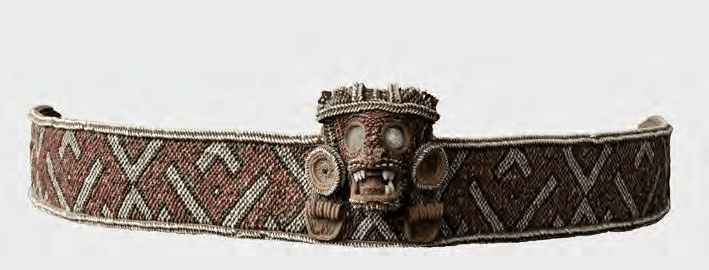
Influencias mayas y aztecas en los taínos de las Antillas Mayores: del juego de pelota al arte y la mitología by Osvaldo Garcia Gocyo is another speculative study on Mesoamerican influences in the precolonial Antilles. Following in the footsteps of Eugenio Fernandez Mendez, Garcia Goyco suggests the number of parallels between Taino and Mesoamerican cultures in religion and the ballgame are proof of Mesoamerican & Taino contact. He even goes further than Fernandez Mendez in his analysis of the religious and mythological parallels, believing the similarities could not be the product of deep archetypes or independent evolution. In order to affirm this theory, Garcia Goyco takes the reader on an excursion through Taino and Mesoamerican art (usually less persuasive than other evidence), religion, and mythology, with occasional references to the Carib and South American indigenous groups for comparative purposes.

In terms of the actual evidence, like Eugenio Fernandez Mendez, Garcia Goyco's argument is strongest with regard to the ballgame and the plazas or courtyards associated with it. The astronomically-aligned Taino batey does not have an equivalent in the northern South American regions their ancestors came from. Moreover, there is possible evidence for human sacrifice in the plazas and the use of stone collars that are reminiscent of those found in Mesoamerica. While the ballgame and courtyards associated with it can be found as far back as the Olmecs, there is so far no evidence for the construction of elaborate plazas in Venezuela or the Orinoco Basin. Thus, Garcia Goyco finds it quite likely that Mesoamerican influences reached Hispaniola and Puerto Rico by or around the 600s or 700s of the Common Era, around the time for the earliest known courtyards in the Greater Antilles. Why we do not find evidence of such elaborate plazas in western Cuba or Jamaica early on is perhaps, according to our author, a product of the later spread of the Taino culture to those islands. It is suggested that the less "advanced" cultures resident on the island were less interesting for economic or cultural purposes to Mesoamerican peoples (perhaps akin to the Putun Maya traders?). 

Besides the evidence from Taino and Mesoamerican ballgames, the rest of the evidence is more suggestive than anything else. The fact that the Taino on one side and Mayas and Aztecs on the other believed in cosmogonic eras and believed there was once a flood or deluge is one example of the types of sources utilized by the Garcia Goyco. It is certainly interesting that in Taino myth children are transformed into frogs, an animal associated with rain. However, it could be purely random that the mother goddess figure of the Aztecs, called Tona, happens to have a name similar to the cry of the children-turned-frogs in Taino myth. Indeed, the association of the frog with rain among the Taino, Aztecs, and Maya does not constitute evidence of Mesoamerican influence on the former. Furthermore, the deity or god Juracan or Hurakan, supposedly tied to the Yura-can of the Galibi Caribs, may not be connected to the Maya Hurakan. Garcia Goyco tries to develop this theory based on Coatrisquie, a deity associated with Guabancex. Coatrisquie's name is similar to the Aztec Coatlicue, who was associated with subterranean waters. Perhaps Guabancex had multiple names like other cemis of the Taino, so Garcia Goyco postulates that Juracan was one of these additional names. Moreover, the Hurakan of the Maya in Guatemala is part of a trilogy of gods associated with the sky, sea, land and life. Indeed, Hurakan to the Maya meant heart of the sky and "a leg." For our author, Jurakan may also be another reference to Anacacuya, whose name points to the Polar Star (hurricanes also rotate around the Polar star).

In addition, the author suggests more parallels between Taino and Mesoamerican mythology. For instance, take the Xibalbay mentioned in the Popol Vuh. Since it bears a slight resemblance to the Taino Coaybay and both were the land of the dead, it is possible there may be a connection between Taino and Maya beliefs. The two cultures also associated bats with death or spirits. Similarly, the Taino Opiyelbuobiran, a cemi with four legs, is linked to the Chacs of the Maya, which also are associated with dogs, forests, and lagoons. Perhaps even more intriguing is the alleged relationship between the Aztec montecitos and the three-pointer cemis of the Taino. Believing the three-pointers to be identified with Baibrama and fertility, Garcia Goyco argues for similar practices among Taino and Aztec communities with regard to the reverence attached to these objects. He even argues that the myth of Deminan and his three brothers has a Maya parallel in a tradition collected from the Yucatan by Antonio Mediz Bolio. Indeed, the tale of Deminan, Yaya, Yayael and the deluge does bear some common features with the Yucatecan tradition of Giaia and his two sons, Giayala'el and Halal. In the the Maya version, however, the father, Giaia, is killed by one of his sons but the same ending with a flood caused by siblings occurs. In fact, perhaps even the 4 Bacabes or brothers in Maya tradition is also an influence on the Taino myth of Deminan and his twin siblings (gemelos divinos). Something similar may also be seen in the Taino and Maya perception of the land as a giant iguana or reptitle floating in water. 

Overall, Garcia Goyco's study finds some interesting parallels between Taino and Mesoamerican cultures. While his evidence is strongest with regard to the ballgame and plazas, some of the similarities in mythology might point to deeper shared influences or cultures. Mesoamerican cultural influences spread far and wide so it is certainly not impossible for elements of them to be found among the Taino of the Greater Antilles. However, is it not possible that some of the mythological similarities might be a product of later influences? Perhaps Taino who accompanied the Spanish to Mesoamerica introduced elements of these myths and traditions? And one cannot discount the possibility of Taino (and Carib) seafarers in the Caribbean traveling to Mesoamerica in the distant past. Perhaps some of the similarities are also merely a coincidence of similar mythologizing based on animals like bats, frogs, and reptiles. By and large, studies pointing to greater similarities with South American lowland Indians are more convincing. Of course, it does seem likely that Mesoamerican influences must have also reached the Antilles either via Central America or directly from Mesoamerica at some point in the precolonial past.