Showing posts with label Kalinago. Show all posts

Sunday, April 5, 2026

Banning Carib and Indian Enslavement (1739)


Whilst randomly perusing Gallica and other sites, we came across Copie d'un ordre du roi interdisant de réduire en esclavage les Indiens Caraïbes, a royal declaration banning the enslavement of Caribs or Kalinago peoples in the French Caribbean. Dated 1739, it obviously did not completely ban or outlaw the enslavement of Kalinago and other indigenous peoples. After all, "Caribs" even appear in some of the runaway slave notices in Saint Domingue from later decades. 

Monday, December 1, 2025

Anacaona's Gift

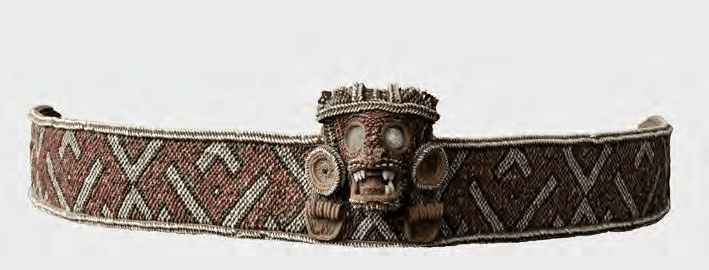
Anacaona's Gift: Cotton and the woven arts of the 11th to 17th century Caribbean by Joanna Ostapkowicz is a must-read for anyone interested in the material culture and history of the indigenous peoples of the Caribbean. Despite the paucity of extant materials made of cotton, the archival sources, Spanish chronicles, ethnographic analogies with South American peoples, and close analysis of ceramics and indigenous sculpture reveal often neglected aspects of Taino textile production and weaving traditions. Ostapkowicz presents compelling evidence for cotton production and weaving as one of great importance for the indigenous peoples economically, socially and politically and religiously. Cotton, as a source of material for wrapping cemis or for making hats, caps, naguas, masks, crowns, belts, capes, arm and leg bands, hammocks, burial shrouds, was undoubtedly a specialist activity for the most elaborate and best products. This made it an extension of cacical power or authority, particularly if the caciques controlled the storehouses where cotton was stored before redistributing it through their families, communities or other caciques. It is possible that elite women may have been the ones responsible for producing the best quality cotton goods, such as those using gold, shell, stone, feathers, and other products to produce refined cemis, belts, or elite regalia. Indeed, their elite status likely freed them from some of the other daily domestic duties of women who likely wove most of the cloth used by the indigenous societies of the island.

Much of the book analyzes closely each example or type of item made with or using cloth in so-called Taino and Kalinago cultures. This close analysis includes basketry, too, for additional examples of weaving use fiber materials. But the bulk of the analysis focuses on types of clothing and the application of cotton materials for wrapping or constructing materials like belts or cemi materials. The artistic and labor skills required to have produced some of the best examples must have been astonishing, which suggests there were specialized textile workers. Similarly, the production of the most elaborate stools (duhos) and platters or wooden objects similarly required experienced workers. Their close association with caciques, especially in the production of items and goods that, at their most refined level, were for elites, attests to a degree of power and hierarchy in the indigenous Caribbean chiefdoms more complex than many realize. Perhaps interpreting too literally Columbus and other chroniclers who often emphasized the nudity of the Taino, scholars have truly missed another dimension of the complex material culture. Indeed, some of these elaborate works featured thousands of beads, different weaving patterns, complex geometric patterns, and skillful use of gold or feathers. The arm bands, caps, skirts, and hammocks, sadly, have not survived, but the level of skill required to produce them (and in quantity) are a testament to the relatively high level of production. 

An area not fully explored however, and this is due to our limited sources in terms of surviving artifacts, is the extent to which the entire population of the cacicazgo had access to certain goods, like hammocks. Moscoso, for example, seemed to think hammocks were not universally used by all Taino. Similarly, the shortages of hammocks and the importation of cloth from Europe (not enough in the early colonial period, but a source for hammocks for settlers who took to the hammock) deserves further inquiry. To what extent were indigenous weavers in Jamaica learning to make European-styled clothes? Was there an increase in the scale of production for the "market" during European colonial rule, despite the lack of interest by Spaniards for cotton plantations in places like Hispaniola? What about Xaragua, when its tribute to Columbus was in cotton and included extra cotton treasures give by Anacaona? In other words, what were the mechanisms for the increase in textile production before colonialism? Was Xaragua, already noted for its cotton, producing a surplus for trade with other parts of Hispaniola, Cuba, and Jamaica? And to what extent were Taino products possibly exported south to the Lesser Antilles or the South American mainland for items like guanin? 

Tuesday, December 3, 2024

Behique or Bohiti

One word that was central to the culture and society of the "Taino" Peoples of the Caribbean was behique. Referring to the priests and healers, or shamans, the word appears to be etymologically linked to medicine and healing. This is not a great surprise, and based on what the Spanish accounts indicate, the behique was probably quite similar, at least in some ways, to South American mainland shamans and healers. Indeed, some of the methods of healing practiced by the "Taino" behique have similarities with Tukano healing practices or even Andean healers. For instance, Guaman Poma's vast letter includes a picture of a healer sucking on the wounds of a patient. Similar practices were described for other parts of South America, too. Even the use of the maraca and terms like piaje or piaye across vast areas of South America might indicate some deep, shared roots of South American healing and shamanism. While piaje or piaye appears to be of Tupi origin, the usage of the word by speakers of Cariban languages or other language families in South America is quite astonishing.

Let's take a brief look at words for heal, healing, shamans, and priests in different South American languages. In Ashaninka, an Arawak language not closely related to Taino, one sees the word sheripiari for shaman. Well, sheri in their language means tobacco, which implies shamans used tobacco in their rituals. This matches what we know of Taino and other South American cultures. One also wonders if piari may be linked to piaje. The Muisca language, in one reconstructed dictionary, gives chyky for shaman. This is clearly distinct, and we should probably consult bilingual dictionaries for various Chibchan languages to explore this. As for Quechua, an Andean language that one should expect to be quite distinct, a shaman is paqu. A curandero might also be called yachaq. For the Warao, however, one sees ibiji arotu as one word for doctor, and eributatu for shaman. Warao, also not an Arawakan language, appears to use a word for healers that is similar to the Arawak ibihi. This is not too surprising, since speakers of Warao and Arawakan languages have likely been interacting for several centuries. Nonetheless, it is interesting to see how the duho, derived from the Warao tongue, became a core part of "Taino" culture while the Warao borrowed words from Arawakan languages for core concepts like healers. 

Additional South American languages are worth exploring. In Palikur, for example, a shaman is called ihamwi. But to heal is rendered as piyih, which sounds close to ibihi. Faire soigner is translated as piyikhis in Palikur, which sort of resembles behique. In Garifuna, however, to heal is areidagua and a shaman is called a buyei. In Wayuu, another Arawakan languages, medicine is epi and to cure is eiyajaa. A curandero is called outshi. In Wayuu, at least, the word for medicine, epi, sounds somewhat close to ibihi. For Desano, a non-Arawakan Amazonian tongue, one sees oco for medicine and for shaman, cũmu.  In Guarani, pohanoha is used for medicine. A priest is a pa'i or avare. Magic is paje. One can see how Guarani has incorporated, at least in part, a word probably of deep Tupi origins for magic. 

In Kalinago, or the language of the "Island Carib" peoples of the Lesser Antilles, Breton is particularly useful. According to him, a priest was a bóye (boyáicou) or niboyeiri. Undoubtedly, Garifuna has retained this in their word for shaman. The word may be of Carib or Tupi origin, too, if similar enough to the Tupi paye with a b replacing the p. The word for medicine among the Kalinago was ibien, quite close to the Wayuu epi and Arawak ibihi. In the Arawak language of Guiana, according to Goeje at least, ibbihi signifies remedy or charm. Ibbihiki means to heal, which shows quite clearly the probable etymology of the Taino behique. But one wonders where Bohiti in Taino as a synonym came from? 

The fascinating thing about Arawak and Lokono in this case, however, is the use of a word for shaman that is quite distinct. According to John Peter Bennett's dictionary, a medicine man is called a semechichi, presumably related to the word for sweet, seme. One can even go back to the 16th century for a fascinating description of Aruaca shamanism in the writings of Rodrigo de Navarrete. According to this author, the Aruacas called old, wise men cemetu. This is an early attestation of the word for shaman, semeti, who, according to Navarrette, trained their students through a special process in which their myths of origin and beliefs were passed down. Navarrete also mentions the belief in gaguche (souls) and the Hubuiri, or Great Lord of the Sky. What Navarrete's account  tells us is that the use of the word semeti or similar words for shamans is probably at least 500 years old among the Arawak. What is most fascinating about this is that despite the use of different titles among Arawaks, Kalinago and the Taino for shamans, all seemed to share at least some common practices. The use of tobacco, for instance, was important. But the rattle or maraca was also important. Indeed, a word for maraca (or a similar instrument?) appears in Breton's dictionary as tatállaraca. Similar instruments were used by the "Taino" in the Antilles, too. The use of the word chemíjn in Kalinago, cemi in Taino, and seme in Arawak point to some broadly shared religious terminology. If it is true that the word is related to the concept of sweetness or delicacy, things highly desired or valued, and also associated with God, gods, or spirits, it is interesting to note that the word was only applied to shamans in Arawak. And why was the word for sweet in Kalinago bímeti, which sounds quite distinct from the Arawak term? Indeed, in Palikur, kitere is sweet. In the Wayuu tongue, sweet is püsiaa.

To conclude, one can see that the Taino word for shaman was etymologically linked to the word for heal and medicine. This makes sense, as a major function of such people among "Taino" peoples was to heal others. Intriguingly, the Warao appear to have been influenced by Arawakan languages in this regard when it comes to healers. However, the Arawaks were using a distinct word for healers or shamans several centuries ago. Their word for shaman, nonetheless, shares with Kalinago and Taino the same connection with cemi. Whether or not it is related to the concept of sweetness or delicateness is still unclear, but the "Taino" shaman was still quite similar to their counterparts in the mainland. One suspects the maraca was of great importance, as was tobacco and other substances. Much of tropical lowland South America seems to have shared in this broad set of customs of shamanism and healing, as reflected in the widespread usage of a Tupi-derived word for shaman across much of the continent. Nevertheless, a few mysteries remain about the behique and the concept of cemi. 
Sunday, December 1, 2024

Cannibal encounters: Europeans and Island Caribs, 1492-1763

Philip Boucher's Cannibal encounters: Europeans and Island Caribs, 1492-1763 was something of a disappointment. Like Whitehead's Lords of the Tiger Spirit, the indigenous group in question is usually peripheral and often silenced in a book that is purportedly about their relations with, for the most part, the English and French in the Lesser Antilles. Boucher, of course, knew this would be a problem due to the nature of the sources, which do not give much of a voice to the "Island Carib" peoples. However, careful reading and intuitive analysis of the English and French sources indicate that the indigenes of the Lesser Antilles were rational political actors who sought to maximize their autonomy whilst playing a delicate balancing act with English and French interests in acquiring more of their lands for their burgeoning Caribbean colonies. 

Boucher also endeavors to understand the reasons for warmer relations between the Kalinago and the French than relations between the former and the English. The policy of douceur and the existence of French traders and missionaries among the Kalinago appear to have been major factors that often led to a stronger French-Carib alliance. Of course, both the French and the English were threats to the indigenous people of the region, but the French had deeper ties with them and pursued a policy of alliance that, according to Boucher, became less relevant after 1690 due to the demographic decline of the Kalinago. 

Sadly, after reading this rather detailed and occasionally fascinating short history, which includes some intriguing questions and comments on the European intellectual, literary, and anthropological view of the Island Carib, I do not feel like I have learned much about the Kalinago in terms of their own worldview, perspective, or actions. Unlike, say, the "Taino" of the Greater Antilles, we have some rather rich resources on their culture and perspective based on Breton's dictionary, various missionary relations, and ethnographies on their descendants in places like Dominica. Perhaps, if Boucher had been able to integrate sources drawing on language and ethnography/oral traditions more completely into the work, the Island Caribs would not feel so marginal or peripheral here. Obviously, the historian was arguing in favor of their agency as historical actors and provides examples of their consistent raids, negotiations, or political and economic behavior that show they were not passive victims. Nonetheless, the reader is left with a sense that they were marginal in major events that shaped their history. With the exception of the mixed-race Indian Warner, for example, no other Indian leader is clearly analyzed or very perceptible. Perhaps a study that includes both the "Black Caribs" and the "Yellow Caribs" would also be helpful for understanding the demographic decline of the Amerindian Caribs and the growth of the culturally related but seemingly distinct "Black Caribs" in St. Vincent. 

Saturday, November 30, 2024

Kalinago Words for Black People

Whilst perusing Breton's dictionary, yet again, we saw that the Kalinago had words for the mixed-race children of Indian men and black women. The language also used Iábouloupou for the children of white men and black women. For black people in general, they seem to have used the word tibouloue. The Galibi on the South American mainland used the word tibourou for blacks. Thus, it seems like tibouloue is of Cariban rather than Arawakan origin. However, in Garifuna, the word wuriti is used for black. In Palikur, black is pohe or puhiye. In Wayuu, it can be rendered as mütsiiya or yuulii. The distant Ashaninka language has cheenkari for black. In Lokono, khareme seems to be the word for black, while in Suriname black people are called Dolhi

However, one must determine if the same word for the black color was applied to people of African descent in the 1500s and 1600s for other Arawakan languages, like Taino. Since "Taino" people were the first to see and engage with Africans and mixed-race people of African descent, it is tempting to wonder if terms like Chibárali and cachionna could be of Taino origin. According to Breton, Chibárali was also used for a type of dangerous arrow. This is no surprise, since the word sounds somewhat close to simara, which was probably the Taino word for arrow (or something rather close to it) which, later on, became incorporated into the word for maroon in Spanish (and subsequently, other European languages). However, the term actually seems to be connected to the ray, an animal whose tail was used for a very deadly type of arrow. The mainland Caribs have a similar word for ray, although the Kalinago term for the arrow made using the ray sounds like a fusion of chimara and chibali. Was the use of this term for black-Indian people to express disdain or fear of the deadly nature of the mix?

It is fascinating how the Kalinago of the 17th century were using a word etymologically linked to arrows and rays to describe mixed-race Indian-black people. By the time Breton met and recorded their language, the Kalinago had already been interacting with Europeans and Africans for several decades. In addition, fleeing Taino speakers from Puerto Rico and likely other parts of the Greater Antilles were said to have sought refuge in the Lesser Antilles. Could these Taino speakers have introduced the meaning of Chimara as connotating half-black heritage? It's certainly possible given the earlier exposure of Taino speakers with Europeans and Africans and their own experiences or knowledge of marronage from Spanish colonial authorities in the 1500s. Intriguingly, the 17th century Kalinago, who were known for taking African slaves as captives and reselling some to Europeans, used another word for maroons or fugitive slaves, Anourouti or toüalicha. These terms seem to be of Cariban or non-Arawakan origin. One suspects the Kalinago also would have quickly gained familiarity with maroon in the sense it was used by Europeans. 

The other term for half-black people, cachionna, could also be used for half-white, half-black peoples. It contains the Kalinago word for Sun but could also be related to a number of other words. It could also be related to a number of words in the Island Carib language referring to fruits, wood, young geese, or a type of manioc flour. Interestingly, cachi is similar to the word for Moon in a number of Arawakan languages, although Breton gives Moon as cati in his dictionary. Is it feasible for the Kalinago language to have used a word for Sun that sounds so similar to the word for Moon in other Arawakan languages? For example, Arawak in Suriname uses kathi for the Moon and adali for the Sun. Garifuna uses hati for Moon. In the language of the Wayuu, Kashi also meant Moon. Why was the Kalinago term for Sun so similar to the word for Moon? Did Breton make a mistake? 

Although far more work remains to be done, we wonder if the general word for black people in Taino and the Arawakan-rooted words in Kalinago were similar, perhaps something like the Garifuna wuritti. Or perhaps something close to the Lokono khareme or Wayuu yuulii was used as a general term for dark-skinned black Africans. But was cachionna perhaps similar to a Taino term for mixed-race black-Indian peoples.

Thursday, November 21, 2024

Guatiao in the Antilles

Another surprise, although it probably shouldn't be, is the use of a word akin to guatiao in the Kalinago tongue. In Breton's dictionary, it is rendered as Itignaom, quite distinct form the Galibi banaré in Pelleprat's dictionary. Clearly, Itignaom is etymologically related to guatiao, and how the word was used by the Kalinago who traded with the French may give us an idea of how it worked. The system of ritual kinship and alliance cemented by an exchange of names was used by the Kalinago and the French for trading purposes. If the Kalinago equivalent was similar to the Taino version, then the appearance of the name Agueybana in both Saona, eastern Hispaniola, and Puerto Rico could possibly have been through a ritual kinship sealed by the exchange of names. This would have facilitated trade and alliances and perhaps explain a lot of the similarities in ritual iconography, art, and even the exchange of areitos between indigenous groups in Puerto Rico and eastern Hispaniola. 

Wednesday, November 20, 2024

Eracra as "Bed"

Another word we find interesting in the language of the island of Haiti, given by Oviedo as a synonym for bohio, or house, is eracra. To some scholars, this sounds like a word derived from a non-Taino language spoken on the island of Hispaniola in pre-Columbian times. While this is possible, we found a potentially similar word that provides clues to its meaning. In this case, Kalinago, according to Breton's dictionary, contains the word écra, denoting bed. The resemblance to eracra could be a coincidence, but it is certainly plausible for the word for bed in Kalinago and Taino to have been similar. Interestingly, this word has not survived in Garifuna, which uses the word gabana. We couldn't find any similar word for house or bed in other languages like Palikur or Wayuu. While some scholars argue that the word eracra may come from the Ciguayo tongue, the existence of a similar word in Kalinago could point to a deeper antiquity or wider spread of it across the Antilles. Alternatively, checking Pelleprat's Galibi dictionary revealed the word acado for bed (and bati as another word for bed). We suspect eracra in Taino signified bed.

Friday, September 20, 2024

Boutou of the Kalinago


The above is a beautiful example of a Kalinago club, or boutou, from Sieur de la Borde's well-known Relation. Like the Taino macana, these weapons were considered by Europeans to be very dangerous. They also had ritual and political connotations. The intricate and elaborate pattern on the above boutou shows the degree to which the Kalinago imbued different aesthetic and possibly political considerations into this powerful weapon. It is of interest that Breton's dictionary of the Kalinago language indicated the use of the word boutou to signify captain or leader, clearly reflected in European sources describing captains with the finest, largest, or most beautiful clubs as markers of their status. As proof of how dangerous these weapons could be, one of our distant European ancestors was nearly killed by "Caribs" who attacked the southern coast of Puerto Rico in the 1560s. According to Burset Flores, Delgado was left for dead by the "Caribs" and received a wound that was likely from their clubs. 

Tuesday, September 3, 2024

Naboria and Nabouyou

Another word that appears to be a possible link between Taino and Kalinago languages can be seen in the case of Naboúyou. Defined briefly in Breton's dictionary of the Kalinago language as "mon serviteur" and in Rochefort's vocabulaire as "mon serviteur à gage," the word seems to express a personal ownership of a servant or laborer (but not a slave). From Breton, one can see that the Kalinago language had a few words for slave based on gender, but one example is támon. To express the idea of "my slave" one changed the word to nitámoni. The ni and na in the words nabouyou and nitámoni appear to express possession in the first-person. Did the -na in naboría also expression possession in the Taino language? It seems to be the case for Garifuna, itself derived from Kalinago, which uses nani to express my and mine. 

A quick perusal of Breton's dictionary for other words or information related to servant, worker or laborer provides a few more clues. In order to express "il sert encore" in Kalinago, Breton translated it as áboúyoukeili. Clearly, one can see commonalities with nabouyou. However, Kalinago also possessed a few other words for servant, including liboüitoulicou or libouitoúlicou. These terms may be related to boüittonum, bouitonum, boüitonú, Bouiiíttoucou, all related to service, subjection or serving others in one capacity or another. Is it possibly related to a Cariban-derived root word that entered the Arawakan speech of the Lesser Antilles? Its possible connection to Taino makes that seem unlikely. In fact, if Taino naboría (or naborí or naburia as it was sometimes recorded in Spanish sources) means something akin to "my servant" then one can assume aboria or boria is somehow connected with the idea for serve, service, or subjection. Indeed, the Diccionario de voces indígenas de Puerto Rico makes this exact claim with boria as the Taino equivalent to labor.

One can see this in a modern Arawakan language rooted in the Caribbean, Garifuna. In that tongue, one of the words for worker or trabajador is ubuein. One sees here in the first syllable something that sounds like it is probably derived from the Kalinago words for servant recorded in the 17th century. Lokono may also hint at a deeper Arawakan origin for labor or work. In this case, the Lokono dictionary using the word emekhebohu for work. To work is translated as emekhebo. The dictionary's word for servant, however, is sanano, which sounds nothing like the words in Taino and Kalinago. However, note the ebo in emekhebohu and emekhebo. My workman in Lokono would be expressed as da'khabo, according to Twenty-eight lessons in Loko (Arawak): a teaching guide by John Peter Bennett. The Lokono words for work and to work may be distantly related to the Taino and Kalinago words, which seem to be based on -aboria/aburia and -abou and ubu.

Looking at another Arawakan language, Wayuu, is also important. Consulting a Spanish-Wayuu dictionary revealed a few terms for servant, worker, work, and slave. Work and to work is translated as a'yatawaa. A worker is called a'yataai or a'yataalü. Slave and servant, however, are translated as achepchia or piuuna. None of these fit directly with our model, although a'yatawaa has the -awaa at the end of the word. Piuuna could potentially be a case of the b and p sounds changing, yet biuuna does not closely match the Taino or Kalinago. Palikur's kannivwiye or kannivwiyo (to work) is also an outlier despite its Arawakan classification. 

Surprisingly, in Warao, a language isolate, one finds the word nebu for worker. This sounds somewhat close to naboría or naborí, and it would be interesting since the word duho may also be of Warao derivation. But yaota appears to be the Warao word for work and often associated with workers, workmanship or salaries. So, from where did nebu come, which seems to be closer to Arawakan words pertinent to labor and servants? In the case of Warao, nebu appears to be linked to young men, or minor dependents of elders and chiefs in their communities. This implies that it was primarily related to generation or age, with expectations of service or labor for one's superiors in the community. 

Ultimately, we are left with the theory that the Taino term naboría is indeed derived from the word for work, or labor. Boria signifies labor or work and similar words in Kalinago, Garifuna and Lokono illustrate it. In the Taino case, it is not entirely clear who the naboría were in precolonial times. One suspects it may have had a similar sense to the words for servant in Kalinago, encompassing young men and men who owed service to their elders or male heads of households.

Monday, September 2, 2024

Dita in Puerto Rico

Another word we think may come from the Kalinago language or the related Taino is dita. Used in Puerto Rican Spanish to designate a "vasija hecha de media higüera, que se destina a varios usos como platos, orinales, etc., entre la gente pobre." According to the Diccionario de voces indígenas de Puerto Rico, dita is probably of indigenous origin and connotation. Luis Hernández Aquino is probably correct. A quick search of the Garifuna and Kalinago languages indicate a very similar word used to designate a drinking cup. In Garifuna, the word is rida, translated in English as calabash drinking cup. In 17th century French sources on the Kalinago or "Caribs" of the Lesser Antilles, a similar word for drinking cup is listed as ritta or rita. Clearly, the Garifuna word for cup is derived from the Kalinago. The question, however, that remains, is determining if the Puerto Rican dita is derived from Kalinago or from a similar Taino word. To our knowledge, no Spanish sources clearly indicate the Taino word for drinking cup or vessel. However, the Spanish word for similar dishes or vessels in part of Latin America is guacal, which sounds more "Taino" than dita or rita or rida.

But other scholars, like Bernardo Vega, believed guacal was the word for basket in Taino. Others also point to Nahuatl for the origin of guacal in Spanish, defining it as basket or crate. Since it is unclear if guacal is actually derived from Nahuatl, it will perhaps be better to avoid any definitive conclusions about the Taino word for drinking cups or vessels. Moreover, since Kalinago was an Arawakan language, it is possible that the Taino word for drinking cup was indeed similar to ritta. If so, it would be interesting to look for other examples of similar words in Kalinago and Taino in which one can see the switching or d and r sounds. This could have been the case due to long-standing precolonial relations between indigenous peoples of Puerto Rico and those living in the Lesser Antilles. Moreover, frequent conflicts between the "Caribs" and the Spanish colonial regime in the 1500s might have introduced Kalinago-speaking captives who left behind their word drinking cup. 

Sunday, September 1, 2024

Kanari in Kalinago and Haitian Creole...

Although we admit to being generally ignorant of linguistics and lack the requisite background to properly research this, we would love to explore possible influences from the Kalinago language in Caribbean Creoles like that of Haiti. Although Haiti was not inhabited by speakers of that Arawakan language, the early French colonies (with their African slaves) interacted with speakers of Kalinago in the Lesser Antilles for decades before Saint Domingue became an officially recognized colony by Spain. So, it is not unreasonable to suspect that the early Creoles with a French lexifier probably acquired or absorbed some words from the Kalinago language in the 1600s. That early linguistic stew also included words like ajoupa and boucan, which appear to be derived from mainland South American languages like Tupi (though Rochefort's Vocabulaire does include ajoupa in one form as a Kalinago word). 

In addition, there were small numbers of "Caribs" in the French colony as slaves or free people, occasionally appearing in runaway slave ads or other documentary sources. The word also appears in other Creoles with a French lexifier, such as Saint Lucian Creole or in proverbs included in J.J. Thomas's The Theory and Practice of Creole Grammar. The word is also present in the Creole of Guadeloupe, albeit with more connotations of a cooking pot. It thus seems quite likely that the word was acquired in the early French colonies of the Caribbean and thereby entered the associated Creoles of these colonial possessions. It is perhaps not too surprising that words of such a utilitarian and everyday relevance were adopted by Europeans and Africans in the Caribbean environment. After all, that was presumably part of the reason why Taino words like bohio and conuco were retained in the Spanish Caribbean for centuries, long after the disappearance of the indigenous languages of those areas.

With this background and historical context established, let's examine the case of the word kanari. In Haitian Creole, kanari refers to an earthen jar, or vessel that is sometimes included in ritual uses associated with Vodou, such as kase kanari. The overall, basic definition is in accordance with the original Kalinago sense of the term, as a clay pot (Breton's Caraibe-French dictionary is a good example). Moreover, like the Haitian usage, the Kalinago apparently also used their earthen pots in rituals. According to Sieur de la Borde, the Kalinago or "Caribs" also left behind a drink as an offering to the "chemeens" or zemis in a kanary. While the ritual uses of the kanary among the "Island Caribs" differs from that of Haiti, it is interesting to see how earthen pots or vessels designated by a name from an indigenous Caribbean language were absorbed into an Afro-Caribbean religion using earthen pots in a different ritual sense. 

Monday, July 29, 2024

Languages of the Pre-Columbian Antilles

The collaboration of Julian Granberry and Gary Vescelius produced a short but very readable analysis of the languages of the precolonial Caribbean. Determined to see how linguistic evidence can be of assistance with tracking external and internal migration in the archipelago based on archaeological and ethnohistoric evidence, Languages of the Pre-Columbian Antilles proposes a few general theories. First, that the earliest Archaic population in the Antilles came from Central America, possibly speaking a Tolan language. A possible remnant of this ancient language presence might be attested in Hispaniola among the Ciguayo, whose word for gold, tuob, indicates a possible connection with that language family. Quisqueya, one of the indigenous names of the island of Haiti may also shouw a connection to Eastern Tol languages of Honduras. Of course, we lack enough words from the language spoken by the Ciguayo of Hispaniola to actually know for sure. But it's an interesting idea, considering the archaeological evidence of a movement of Central Americans from the area of Belize/Honduras into the West Indies in prehistoric times. Granberry and Vescelius also propose a movement of a population speaking a language related to Warao, a language isolate of Venezuela. This movement happened after the movement of Central Americas into the Antilles, and may have survived in the Macorix language, still spoken in parts of Hispaniola when the Spanish arrived (although not restricted to only Hispaniola). 

The authors then propose the movement of Arawakan speakers after this period, who spoke a language from the Northwest branch of Maipuran languages, closer to Goajiro than, say, Lokono and the Northeast branch. Over time, the expansion of Arawakan speakers into the Greater Antilles and Lesser Antilles led to the replacement of the Warao-like language or a new, creolized form of the Arawakan tongue, which became the Taino language. Evidence for a pre-Taino Warao-related language is also lacking enough evidence to support, but words like duho or duhu in Taino appear to be derived from the Warao word for stools or sitting. Similarly, the word for gold, nozay, in the Lucayan Islands may be related to the Modern Warao term for gold. According to Granberry, this Warao-influenced Arawakan language was the "Ciboney" tongue used in Cuba, western Hispaniola, probably Jamaica and the Lucayan islands. The language we call Classic Taino, however, was the universal tongue and appears to have been in a process of expansion into Cuba right before the Spanish conquest. As for the Guanahatabey of Cuba, Granberry and Vescelius accept the theory of their Archaic origins, which implies they may have spoken one of the pre-Arawak languages of the Antilles.

Trying to connect language shifts with ceramic styles and lithics can be fraught with danger. Sometimes languages spread or change without necessarily correlating with ceramic styles or other aspects of material culture. In that regard, we are unsure how to interpret the theory of a Meillacoid ceramics style and Chican being signs of distinct languages. In addition, we wonder about the power of Xaragua in western Hispaniola, which was considered by Las Casas to have spoken the most refined form of the universal language of the island. If that language was Taino, and they spoke the most refined form of it while also being considered the most powerful cacicazgo of the island, does that not imply a strong or influential Classic Taino influence in the western parts of Hispaniola? Nevertheless, Granberry and Vescelius's study, despite its very limited data to support their ideas of Tolan and Warao-like languages in the ancient Great Antilles, raise a number of interesting insights. For instance, using toponyms to postulate where the first inhabitants of the Lucayans came from (Cuba and Hispaniola) is an interesting idea that can be supported with archaeological evidence. Furthermore, the adoption of the Warao duhu for what is one of the most important signs of chiefly power and ceremonial uses in Taino civilization is certainly interesting, even if no other Taino words related to chiefly power or spirituality have a link to Warao.

Likewise, the fact that Eyeri or Lesser Antilles Arawakan language was closer to Northeast Arawakan languages on the South American mainland, a pattern still evident in the Garifuna language which descends from, illustrates the huge linguistic diversity in the precolonial period. A few other instances of specific words that do not demonstrate clear Arawak affinities or archival sources might have further strengthened some of the ideas proposed by the authors. For example, Oviedo's reference to the use of the word "eracra" for bohio or house by the Indians of the island of Haiti should have been examined to see if it shows any similarities with Warao or Central American tongues. And the explanation of the prefix maku and the definition of Macorix or Macorix could have been expanded upon for understanding references to "Macurijes" in other parts of the Great Antilles, such as Cuba. If Macurijes in Cuba during the second half of the 16th century did not speak Taino, was it a Warao language? Or were they speaking what the authorss considered "Ciboney" instead? It is difficult to know, although the idea of Macorix implying a non-Arawakan language is an interesting one. It might be worthwhile to also look into languages in Florida the coast of Panama and Colombia for possible connections with other cultures the Greater Antilles peoples were in contact with.

Sunday, June 30, 2024

The Caribs of Dominica

Since we have read a few of his essays on the Dominica Caribs elsewhere, we thought Douglas Taylor's The Caribs of Dominica. Though very short, it seems to be based on fieldwork in the Carib Reserve in the 1930s. It certainly reflects that older era in which Western scholars openly expressed racist and condescending views of their ethnographic subjects. Nonetheless, the material focus of this brief study highlighted how the Caribs of Dominica, even after generations of Christianization and intermarriage with the black population, retained some distinct practices of canoe-making, fishing, basketry, and traditions that give some insights into the nature of precolonial indigenous social practices. For our purposes, however, it would likely be more fruitful to revisit and read Rochefort, Labat, and Breton, especially the bilingual dictionary from the 17th century that would shed even more light on the nature of an indigenous Caribbean people. 

Tuesday, June 4, 2024

Dugu Song


Although we remain quite ignorant of the history and culture of the Garifuna peoples, it is astonishing and intriguing how this "Canto Dugu" resembles our Haitian ritual music and chanting. Rhythmically less complex, one can see, perhaps, the "Carib" or Indian influences in Garifuna music and tradition. That said, Garifuna Dugu undoubtedly has African features that unite it, at least somewhat, with the better-known Vodou, Santeria and other Afro-Caribbean traditions.

Thursday, March 14, 2024

The Caribs and a Jesuit

De la Borde’s Relation on the Caribs of the Caribbean, or Kalinago, is a fascinating document. Despite his view of the need to humanize and civilize the Carib before successfully converting them to Christianity, the Jesuit’s account of 17th century Caribs of St. Vincent is filled with interesting details about the lives, customs, religion and healing practices of this indigenous group. While denigrating the Caribs and their “barbarous” practices and religions, one can still detect some degree of respect for the success of the Caribs in their lifestyle. Moreover, for those of us interested in ethnographic and historical sources on an indigenous Caribbean population related to our Tainos, it is interesting to compare our Jesuit with the earlier 16th century sources on the Taino of the Greater Antilles. Indeed, by the time French Jesuits were proselytizing in the Lesser Antilles, the local population of the region had already been interacting with Europeans and Africans for over a century. Moreover, indigenous people from the Greater Antilles had already, at least in the case of Puerto Rico, fled to the Lesser Antilles. That Taino exodus from areas like Puerto Rico plus the already shared culture, to some extent, between the Kalinago and the Taino, makes for interesting readings. For instance, the Carib lunar calendar and important symbolism attached to stars, the sun, and the moon may have been shared elements with the Taino. Some of the similar religious and healing customs of the boye or piaye with the Taino behique, including even the act of sucking on parts of a patient’s body, suggest another commonality. The similar veneration of cemis or zemis points to another deeply rooted aspect of indigenous Caribbean spirituality. Clearly, despite the Kalinago claiming a relationship with the continental Galibias, their culture and language was also immersed in Caribbean island customs and civilizations. What we would like to know is to what extent Louquo of Carib myth, the first man, may have some correspondence with Yucahu and the characters in the corpus of Taino myths collected by Pane. The Caribs, at least as understood by the French, lacked the type of higher ceremonialism attached to political leadership or caciques so one might be justified in concluding that their religious and spiritual practices were less elaborate than those of the Taino. 

Wednesday, June 14, 2023

Tainos and Caribs: The Aboriginal Cultures of the Antilles

Robiou Lamarche's proposed myth-geography of our island.

Robiou Lamarche's Tainos and Caribs: The Aboriginal Cultures of the Antilles is perhaps best read in Spanish. The English translation contains numerous errors, but is still worth the investment for anyone interested in a provocative interpretation of the indigenous Caribbean past. Drawing on the usual sources of ethnohistorians, archaeology, and a comparative approach to related and similar societies in northern South America, Robiou Lamarche proposes a number of fascinating theories on Taino and Carib cosmovision, astronomical knowledge, and cultural developments. By integrating the Caribs of the Lesser Antilles into the narrative, one also begins to see parallels between the two groups and how their legacy can be found today across the Caribbean. It is an epic history encompassing thousands of years of migration, cultural transformations and adaptation, culminating in the Taino chiefdoms of the Greater Antilles and the establishment of the Island-Caribs in the Lesser Antilles. The emphasis on religion and culture also gives a human face to the societies who, to a certain extent, are among our ancestors. 

Since one might reasonably worry about the dangers of relying too heavily on Fray Ramón Pané for understanding Taino religion and cosmology, Robiou Lamarche draws from art, petroglyphs, astronomy, and ethnographic research on related societies to expand our knowledge of the Taino world. Naturally, some of the conjectures remain very speculative due to the limitations of our sources. However, the advanced nautical skills of the indigenous Caribbean peoples and certain recurring motifs in their art suggest that Robiou Lamarche was correct about their cosmology reflecting a preoccupation with the Sun, Moon, stars, constellations, and its impact on the natural world. It would be only natural to suspect that the indigenous inhabitants of the Caribbean would organize their calendars, alignment of plazas, rituals, agricultural activities, and social practices around this astronomical observation of the stars, which could be related to the shifts in seasons, tides, animal life, or myths of origin in caves and belief in spirits. The finding of similar artifacts across the Greater Antilles attesting to similar ritual practices (such as cohoba ceremonies) suggest the cosmovision of the so-called Taino sketched by Pané may have been accurate beyond Hispaniola or Haiti. 

We only wish the chapters on Carib interactions with Europeans and Africans, as well as the legacy of the indigenous Caribbean population in the 21st century received a more detailed analysis. If, as stated in the text, the Caribs had been interacting with Europeans and Africans for over a century by the time of the 17th century French chroniclers began describing their societies, it would have been interesting to look for elements of African and European influence on the Caribs (and vice versa). The adoption of the sail, for instance, is an interesting example of technological transfer. But what about African or European influences on Carib religion or ritual? Are some of the similarities some claim to see between, say, Haitian Vodou and indigenous Caribbean religion, perhaps a product of the centuries-long interaction of the Caribs with Africans and not a sign of direct Carib or Taino influence in Haitian religion? The Island-Carib societies described by Robiou Lamarche would have been influenced by the European and African captives and assimilated persons living under their rule, composing perhaps 20% of their population. The indigenous legacy today also deserves more scrutiny beyond the elements of material culture that persisted across the centuries. But that would require oral history or analysis of popular religion in the Caribbean on a vast scale.