Showing posts with label Venezuela. Show all posts

Saturday, October 18, 2025

Wayuu Match


Whilst playing around with Gedmatch, we came across some more recent kits for Wayuu peoples of South America. Since they appear to have been in contact or at least interacted with the Taino (or the ancestors of the Taino) based on linguistic evidence, we have always wondered if any Wayuu would match Caribbean peoples with indigenous ancestry genetically. Well, we seem to have encountered one we share 6.1 cM of DNA with on a segment of our second chromosome. Assigned to "Indigenous Puerto Rico" by Ancestry, this seems to suggest the indigenous component of Puerto Rican ancestry is similar to the genetics of the Wayuu and other Arawakan speakers of this part of South America. In order to confirm our findings, however, one must thoroughly check the segment and see if any other matches can be found there for indigenous segments in Puerto Ricans and Wayuu. Of course, one must also consider the large-scale slave trade of indigenous captives from the circum-Caribbean into the Caribbean by the Spanish during the 1500s. From the limited tools of Gedmatch, the shared segment appears to be "Amerindian" if one trusts admixture chromosome painting tools. However, there is only one Wayuu sample we share at least 6 cM of DNA with. 

Wednesday, September 4, 2024

The Meaning of Xaragua

Another word from the Taino language we would like to explore is Xaragua. According to Granberry and Vescelius's Languages of the Pre-Columbian Antilles, Xaragua meant something like "Lake Country" but the authors do not present any evidence to support this assertion. However, it remains a plausible translation for the place name of Hispaniola's most powerful cacicazgo. If the gua or wa at the end of the name signifies land, then the first part of the word (xara or jara) should be the Taino word for lake. And various Spanish sources refer to the lake or lakes of Xaragua. The Diccionario de voces indígenas de Puerto Rico lists amá as the Taino word for river or body of water, but it seems the language must have included another word for lake.

Let's look at other Arawakan languages to see if xara or jara probably meant lake. In Garifuna, lake is dúnaha. In Palikur, lake is mahakwa. In another Arawakan language, Lokono, sea is bará and, according to Goeje's The Arawak Language of Guiana, lake is kiraha. In Wayuu, on the other hand, lake is lamuuna and sea is palaa. In the Kalinago tongue, one sees tona for water or river and taonabo for pond or small lake. The 17th century French dictionaries for the language are not particularly useful here. Nonetheless, one can see some degree of resemblance between the Taino Xaragua and the Palikur mahakwa or the Lokono kiraha.

Interestingly, its on the Venezuelan coast, near the mouth of the Yaracuy river, where early European sources recorded a large village or town called Xaragua. According to Nikolaus Federmann's account of his explorations of the interior of Venezuela, this town or village was called Xaragua and located on the coast or near the shore, about 80 leagues east of Coro. This is actually not too far from the modern state of Aragua in Venezuela, which happens to include a large lake (Lake Valencia) in its territory as well as river also called Aragua. It is not entirely clear who the residents of the area were (another group of Caquetios, like the ones who guided Federmann to the area or Ciparicotos, who spoke a different language than the Caquetios?), but the appearance of the word Xaragua for an area near large lakes and rivers in both Hispaniola and Venezuela is not entirely coincidental, is it? The inhabitants of the area around Lake Valencia and today's Aragua may have been Caquetios or another Arawakan-speaking group, according to Los aborígenes del occidente de Venezuela, su historia, etnografía y afinidades lingüísticas by Alfredo Jahn. If so, perhaps the Xaragua name for the more distant coastal village was possibly reflecting a much larger area of connected peoples with rivers and lakes like the Yaracuy and Lake Valencia? It is difficult to say since Xaragua was not especially near Lake Valencia.

In short, Xaragua does indeed seem likely to mean lake or Lake Country. The Lokono and Palikur examples are close enough. The Venezuelan village visited by Federmann may have been populated by a Caquetio-speaking group, though that is pure speculation on our part. In Venezuela, the village or pueblo does not seem to have been exceptionally close to lakes, but Lake Valencia and the modern state of Aragua seem to be possibly linked to Caquetio or Arawakan-speakers in the precolonial area. If so, it may be additional evidence of Xaragua implying some type of connection or relationship with lakes and large bodies of water. 

Tuesday, February 6, 2024

Lords of the Tiger Spirit

Neil Whitehead's Lords of the Tiger Spirit: A History of the Caribs in Colonial Venezuela and Guyana, 1498-1820 presents analysis of Carib resistance and eventual conquest in Guayana, a region that is today's Venezuela and Guyana. Due to the region's incomplete conquest by the Spanish in the 16th century and the competing spheres of influence of European powers, the indigenes of the Orinoco region, particularly those who came to be identified as Caribs, retained their autonomy until the second half of the 18th century. Whitehead's study seeks to elucidate why Carib autonomy persisted for so long in this region and why, despite the small indigenous population by the 19th century, their relations with the Spanish, Dutch, English and French were so pivotal for the eventual emergence of the states of Venezuela and Guyana. 

Whitehead primarily relies on archival sources, missionary reports, Dutch West India Company records, the Archivo General de las Indias and ethnographic studies of indigenous groups in Venezuela and Guyana to establish an identity for the Caribs. Since there was an inherent ambiguity in the moniker Carib, as used and developed by the Spanish for Indian groups hostile to them, one must look to linguistics, modern ethnographies, and indigenous kinship patterns and political economies to understand how some Indian populations in Guayana became Carib (or were absorbed into that category). Since Spanish slave raiding and conflict with "Caribs" began in the 16th century, Caribs along the Orinoco and other rivers were quick to establish an alliance with the Dutch. By trading dyes, slaves, provisions and supplies to the Dutch, the Caribs were able to receive firearms, metal hatchets, axes, rum, and European manufactured goods. These European goods, in turn, gave the Caribs a prominent economic role in the region since they were able to supply European products to other indigenous populations. The Dutch colonial presence in Essequibo, Berbice and Demerara, especially before the growth of the sugarcane industry (which relied on African slave labor) was especially important for the Carib resistance to the Spanish in the Orinoco.

Unfortunately for the Caribs, the 18th century led to the eventual dislocation, significant population decline, and reduction of Caribs (and other Indians) by the Spanish. The 18th century witnessed the expansion of missions led by orders like the Franciscans, Capuchins, and Jesuits into the interior of Guayana. These missions, with their entradas, militia support, and relocation of Indian populations into a regimented, missionary-controlled existence disrupted Carib political, social and economic independence. Caribs who continued to resist or those who fled further into the interior or to their Dutch allies found them to be less supportive of military conflict with the Spanish. Indeed, the Dutch colonies, with their reliance on slavery and sugar plantations, were eager to receive mules, horses, and other goods from the Spanish territory. Furthermore, in spite of the Dutch reliance on their Carib allies for "bush police" to hunt runaway slaves, the Dutch correctly perceived the greater investment of Spanish resources and forces to subdue and pacify Indian populations was a markedly different development in Spanish colonial policy. However, the Spanish, despite the success with the missions in reducing and controlling indigenous groups, was not able to completely subdue the Caribs or threaten the Dutch in Essequibo, Demerara or Berbice.

What makes the Carib case so interesting is that their more diffuse political system appears to have been what saved them from the rapid Spanish conquest of areas like Peru and Mexico. Instead of a vast, centrally administered state in which the Spanish were able to remove and replace, Guayana represented several small polities or village-level communities. While a prominent war-chief, cacique, or shaman could potentially bring together several villages, the lack of a single political center to neutralize or eradicate led to the Spanish inability to conquer Guayana for centuries. The diffused nature of indigenous polities and dispersed settlements probably also hindered the spread of epidemic diseases of Old World origin, too. Indeed, the reduction of Indians by the missions probably played an essential role in disrupting Indian subsistence pattern and increasing contact with Europeans, eventually leading to substantial population decline by the end of the 18th century. Of course, this lack of a centralized administration was also used against the Caribs (and indigenous Guayana in toto) as the Dutch and Spanish picked allies to pit one against the other. The destructive impact of the slave trade must have also contributed to the instability of the region as Caribs, perhaps acquiring an understanding of the exchange value of captives, likely raided more communities for captives or engaged in conflicts with groups like the Manoa to preserve their privileged access to European goods. 

Overall, the combination of the missions, renewed Spanish efforts at expansion, the decline of Dutch trade with the Caribs, and the demographic collapses caused by exposure to Old World disease led to the defeat of the Caribs. Nonetheless, their centuries-long resistance to Spanish occupation and their key role as antagonists, traders, and raiders helped shape Venezuela and Guyana. Intriguingly, their close relations with the Kalinago ("Island Caribs") in the 16th and 17th centuries also connected them to Antillean affairs. Just as in the Lesser Antilles, Caribs in Venezuela and Guyana were able to use inter-European rivalries to buttress their own position and play an important role in trading, slaving, and anti-Spanish endeavors. One wishes that more could be said about the pre-1498 history of contacts with the Antilles, particularly long-distance trade networks that connected the Guianas with the llanos, Amazonia and Andes. 
Wednesday, November 15, 2023

Maritime Interactions in the Greater Caribbean


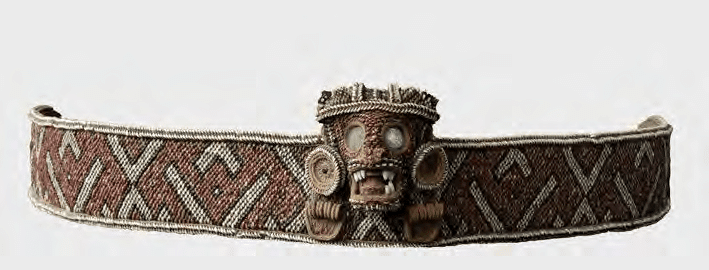
We are still obsessed with the question of interactions between the Isthmo-Colombian region and the Caribbean in the pre-Columbian past. While much more needs to be uncovered before we can speak confidently about the subject, a number of finds by archaeologists and the probable import of guanin from Colombia suggest long-distance trade and interactions.

Sunday, October 1, 2023

Federmann's Indian History

Although Nikolaus Federmann's Indian History is most useful for its recounting of Federmann's entrada into the Venezuelan interior in the 1530s, there are some occasionally interesting references to the Taino of Hispaniola and the customs and cultures of indigenous Venezuela. Ostensibly sent to Venezuela on behalf of the Welsers, who received the administrative responsibilities of the colony, Federmann traveled from Coro to the interior. His superiors hoped to develop mines in Venezuela and Federmann himself was interested in finding access to the sea. His journey led him through the lands of various Indian nations (most of whom were politically decentralized), such as the Caquetio. After a series of raids, perilous travel through mountains, swamps, and plains and what was likely a bout of malaria, Federmann's expedition returned to Coro. 

Despite promising to later tell the reader more about the customs and cultures of the various indigenous peoples, the reader is left in the dark about much of this. We learn that some, for instance, wore or used golden pectorals with "demonic shapes" and the Caquetio possessed gold. The indigenous peoples of Venezuela were possibly a source of the guanin used by the Taino in the Antilles. Furthermore, there was a coastal village or pueblo called Martinico east of Coro, which may, perhaps, have had some correspondence with the Matinino mentioned by the Taino of Hispaniola to Colombus? The Matinino mentioned to Columbus was possibly a reflection of mythologically-informed geography, but the guanin connection may mean something significant. After all, it is possible that the Taino of Hispaniola knew of Matinino as east of the "Carib" if travel to the Venezuelan coast was through the east to the Lesser Antilles, then south. Furthermore, some of the indigenous peoples of the Venezuelan interior spoke Arawakan languages and used terms like baracoa, macana and bohio. Certainly, Federmann used these Taino terms but they appear to have also been used locally. Federmann's description of the bohios he encountered, though often incomplete, suggest they were large structures and contained storage rafters. Some of their settlements in the Venezuelan interior, especially among the Caquetio of the Orinoco plain, could be rather large and contain well-defended villages. 

Unfortunately, the extent to which Federmann's population estimates can be relied upon is unknown. According to him, Hispaniola still had 20,000 Indians (Tainos) in c.1530, but all lived in the Spanish towns. It is unclear what that number is based upon, but it does seem likely that the Taino of Hispaniola (plus enslaved indigenous peoples from Venezuela and other regions) were still a sizable part of the population. Indeed, Federmann even hints at the lack of Spanish or European influences upon the Taino by referring to them as naked and "screaming" people. The description of bohios, body paint, indigenous military practices, and the amazing efficacy of the horse in plains against Indian foes possibly help elucidate the "ease" of the Spanish conquest of the Taino, too. Federmann, of course, had to deal with numerous Indian groups who seem to have lacked the type of powerful chiefdoms described by the Spanish for Hispaniola. 

In summation, Federmann's account fails to deliver the necessary ethnographic details but provides hints at Hispaniola and the Taino. In addition to being a major source of captive Indian labor in 16th century Hispaniola's mines, certain practices and customs that received mention in Federmann's Indian History possibly suggest the importance of the Venezuelan area as a source of guanin to the Antilles. Long distance precolonial trade between, say, Venezuela and Hispaniola, may have been indirect. But contact was clearly ongoing and the cultural practices of Venezuela's indigenes may shed light on the Taino.