We are still obsessed with the question of interactions between the Isthmo-Colombian region and the Caribbean in the pre-Columbian past. While much more needs to be uncovered before we can speak confidently about the subject, a number of finds by archaeologists and the probable import of guanin from Colombia suggest long-distance trade and interactions.
Deminán's Journey: Exploring the Indigenous Caribbean...one island at a time
Wednesday, November 15, 2023
Saturday, November 11, 2023
Tairona and Muisca
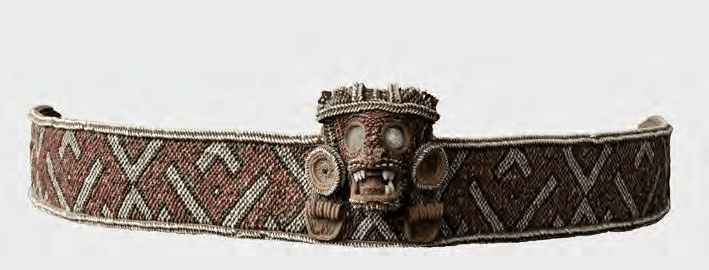
Although they not our Taino, the likelihood of South American indigenous cultures like the Tairona being the source of the Taino guanin is likely. Moreover, the stylistic similarities in Tairona and other indigenous arts of Colombia suggest trade and other forms of relationships with the indigenous peoples of the Antilles.
Sunday, November 5, 2023
Maya and Aztec Influences in the Greater Antilles
Influencias mayas y aztecas en los taínos de las Antillas Mayores: del juego de pelota al arte y la mitología by Osvaldo Garcia Gocyo is another speculative study on Mesoamerican influences in the precolonial Antilles. Following in the footsteps of Eugenio Fernandez Mendez, Garcia Goyco suggests the number of parallels between Taino and Mesoamerican cultures in religion and the ballgame are proof of Mesoamerican & Taino contact. He even goes further than Fernandez Mendez in his analysis of the religious and mythological parallels, believing the similarities could not be the product of deep archetypes or independent evolution. In order to affirm this theory, Garcia Goyco takes the reader on an excursion through Taino and Mesoamerican art (usually less persuasive than other evidence), religion, and mythology, with occasional references to the Carib and South American indigenous groups for comparative purposes.
In terms of the actual evidence, like Eugenio Fernandez Mendez, Garcia Goyco's argument is strongest with regard to the ballgame and the plazas or courtyards associated with it. The astronomically-aligned Taino batey does not have an equivalent in the northern South American regions their ancestors came from. Moreover, there is possible evidence for human sacrifice in the plazas and the use of stone collars that are reminiscent of those found in Mesoamerica. While the ballgame and courtyards associated with it can be found as far back as the Olmecs, there is so far no evidence for the construction of elaborate plazas in Venezuela or the Orinoco Basin. Thus, Garcia Goyco finds it quite likely that Mesoamerican influences reached Hispaniola and Puerto Rico by or around the 600s or 700s of the Common Era, around the time for the earliest known courtyards in the Greater Antilles. Why we do not find evidence of such elaborate plazas in western Cuba or Jamaica early on is perhaps, according to our author, a product of the later spread of the Taino culture to those islands. It is suggested that the less "advanced" cultures resident on the island were less interesting for economic or cultural purposes to Mesoamerican peoples (perhaps akin to the Putun Maya traders?).
Besides the evidence from Taino and Mesoamerican ballgames, the rest of the evidence is more suggestive than anything else. The fact that the Taino on one side and Mayas and Aztecs on the other believed in cosmogonic eras and believed there was once a flood or deluge is one example of the types of sources utilized by the Garcia Goyco. It is certainly interesting that in Taino myth children are transformed into frogs, an animal associated with rain. However, it could be purely random that the mother goddess figure of the Aztecs, called Tona, happens to have a name similar to the cry of the children-turned-frogs in Taino myth. Indeed, the association of the frog with rain among the Taino, Aztecs, and Maya does not constitute evidence of Mesoamerican influence on the former. Furthermore, the deity or god Juracan or Hurakan, supposedly tied to the Yura-can of the Galibi Caribs, may not be connected to the Maya Hurakan. Garcia Goyco tries to develop this theory based on Coatrisquie, a deity associated with Guabancex. Coatrisquie's name is similar to the Aztec Coatlicue, who was associated with subterranean waters. Perhaps Guabancex had multiple names like other cemis of the Taino, so Garcia Goyco postulates that Juracan was one of these additional names. Moreover, the Hurakan of the Maya in Guatemala is part of a trilogy of gods associated with the sky, sea, land and life. Indeed, Hurakan to the Maya meant heart of the sky and "a leg." For our author, Jurakan may also be another reference to Anacacuya, whose name points to the Polar Star (hurricanes also rotate around the Polar star).
In addition, the author suggests more parallels between Taino and Mesoamerican mythology. For instance, take the Xibalbay mentioned in the Popol Vuh. Since it bears a slight resemblance to the Taino Coaybay and both were the land of the dead, it is possible there may be a connection between Taino and Maya beliefs. The two cultures also associated bats with death or spirits. Similarly, the Taino Opiyelbuobiran, a cemi with four legs, is linked to the Chacs of the Maya, which also are associated with dogs, forests, and lagoons. Perhaps even more intriguing is the alleged relationship between the Aztec montecitos and the three-pointer cemis of the Taino. Believing the three-pointers to be identified with Baibrama and fertility, Garcia Goyco argues for similar practices among Taino and Aztec communities with regard to the reverence attached to these objects. He even argues that the myth of Deminan and his three brothers has a Maya parallel in a tradition collected from the Yucatan by Antonio Mediz Bolio. Indeed, the tale of Deminan, Yaya, Yayael and the deluge does bear some common features with the Yucatecan tradition of Giaia and his two sons, Giayala'el and Halal. In the the Maya version, however, the father, Giaia, is killed by one of his sons but the same ending with a flood caused by siblings occurs. In fact, perhaps even the 4 Bacabes or brothers in Maya tradition is also an influence on the Taino myth of Deminan and his twin siblings (gemelos divinos). Something similar may also be seen in the Taino and Maya perception of the land as a giant iguana or reptitle floating in water.
Overall, Garcia Goyco's study finds some interesting parallels between Taino and Mesoamerican cultures. While his evidence is strongest with regard to the ballgame and plazas, some of the similarities in mythology might point to deeper shared influences or cultures. Mesoamerican cultural influences spread far and wide so it is certainly not impossible for elements of them to be found among the Taino of the Greater Antilles. However, is it not possible that some of the mythological similarities might be a product of later influences? Perhaps Taino who accompanied the Spanish to Mesoamerica introduced elements of these myths and traditions? And one cannot discount the possibility of Taino (and Carib) seafarers in the Caribbean traveling to Mesoamerica in the distant past. Perhaps some of the similarities are also merely a coincidence of similar mythologizing based on animals like bats, frogs, and reptiles. By and large, studies pointing to greater similarities with South American lowland Indians are more convincing. Of course, it does seem likely that Mesoamerican influences must have also reached the Antilles either via Central America or directly from Mesoamerica at some point in the precolonial past.
Thursday, November 2, 2023
Los indios de Cuba en sus tiempos históricos
Felipe Pichardo Moya's Los indios de Cuba en sus tiempos históricos is a fascinating but dated work. Focusing on the history of Cuba's indigenous peoples since the arrival of Columbus, Pichardo Moya finds evidence of indigenous survival everywhere. First, he demolishes the myth of an easy conquest of the island. In addition to Hatuey, a number of indios alzados and other Cuban indigenous rebels and maroons continued to resist the Spanish for several years. Some of these resisters were leaders who opposed Velasquez while others were leaders like Guama who seized opportune moments to rebel (such as the Florida expedition). Indeed, they also were well aware of Enrique and the Taino resistance on Hispaniola. With the official end of Indian slavery and the disappearance of the encomienda system, the surviving indigenous population of the island experienced two processes: the settlement or establishment of pueblos de indios like Guanabacoa or El Caney and the descendants of Indian maroons settling in marginal or distant areas of the island, away from colonial authorities. According to Pichardo Moya, those in the pueblos de indios were likely more influenced by colonial society and ways, but even they conserved Indian dances and customs. Those living in marginal areas and less likely to be documented, were supposedly able to preserve even more indigenous practices and customs. To what extent this is actually true is up for debate, but Pichardo Moya neglects the potentially significant impact of Indian slaves and migrants from other parts of the Americas in Cuba.
Nonetheless, there are some interesting sources cited for the 1600s, 1700s and 1800s on Indian Cuba plus the author's own grandfather was involved in El Caney's legal struggles in the 1800s to protect their land. Last but certainly not least, the fact that some isolated areas of Cuba have retained matrilineal inheritnce, a practice also said to have been practiced among the indigenous people of the island, is also suggestive of another area of Indian survival. Despite Cuba's pueblos de indios being better documented than those of Puerto Rico or the Dominican Republic, the conditions in the other two Spanish Caribbean colonies were possibly similar. It would be interesting if ethnographic work in Puerto Rico, for instance, indicated evidence of matrilineal inheritance in areas with oral traditions of native ancestry. Perhaps a thorough examation of the libros parroquiales may be in order for some areas of Puerto Rico, too, since they could reveal "Indian" survival in parts of the island in the 1600s and 1700s that is not documented elsewhere.
Sunday, October 15, 2023
Art and mythology of the Taino Indians of the Greater West Indies
Eugenio Fernandez Mendez's Art and Mythology of the Taino Indians of the Greater West Indies is a frustrating read. A short work based on Taino art, mythology and archaeology seen in several examples of Taino art and glimpses from the Spanish chronicles, the author posits a significant Mesoamerican and/or Central American influence on the Taino. The actual chronology of this influence is uncertain, but the author is convinced of various mythological, theogonic and aesthetic similarities between the Taino and Mesoamerica, which presumably can be traced all the way back to the Olmec or proto-Olmec culture. How exactly this influence reached the Greater Antilles, and mainly Puerto Rico and Hispaniola, is unclear. If the general chronology of the rise of chiefdoms with greater political centralization and social differentiation began around 1000-1200 CE for Hispaniola and Puerto Rico, this is long after the Olmec and Classic Maya. However, if Mesoamerican influences may have sprung from an earlier period in the history of the circum-Caribbean, perhaps one in which peoples from the Yucatan, southern Mexico and other areas migrated to or traded with peoples living in the Greater Antilles, perhaps some stylistic and religious practices were transferred to the Taino. And who knows, perhaps the Totonac stone yokes are related to the famous stone collars of pre-Hispanic Puerto Rico.
There likely were contacts of some sort between the Antilles and Central America and Mesoamerica. Fernandez Mendez cites a number of sources indicating Taino contacts with Florida, northern South America, and Central America in the late 15th and early 16th centuries. These contacts likely existed long before Europeans arrived in the region. That said, there is a huge hole in Fernandez Mendez's theory. If Mesoamerican influences were so important on Taino mythology and art, why is so little evidence of this found in Jamaica and Cuba? We know indigenous people of Jamaica and Cuba likely had some degree of contact with the Yucatan, for example, but why is so little evidence of the influence of Mesoamerican "high" cultures evident on those islands? Why is it that more distant Hispaniola and Puerto Rico, where the most elaborate ballcourts, plazas, stone sculpture, duhos, and cacicazgos were developed, lack any incontrovertible evidence of trade or exchange with Mesoamerica? Did seafarers, traders, priests, and skilled laborers from Mesoamerica or Central America decide to skip most of Cuba and Jamaica because they were backwaters, demographically or culturally? It seems rather more likely that ideas or ritual practices may have reached Puerto Rico and Hispaniola via South America rather than a direct link to Mesoamerica. Fernandez Mendez seems to think otherwise, especially given the lack of elaborate ballcourts in northern South America.
However, the rest of his argument relies on speculative interpretations of Las Casas, Pane, Oviedo, and other chroniclers and the Spanish sources on Mesoamerican religion and ritual to claim a strong influence of the Maya, Huastecs and others on the Taino. While there definitely are parallels between the religious and mythological world of the Taino and, perhaps, the Aztecs and Maya, one can also find even more numerous direct parallels and ethnolinguistic evidence linking the Taino to the cultures of northern South America. Interpretations of Pane such as those of Arrom and Stevens-Arroyo are more convincing, particularly in that they are better supplied by ethnographic evidence on the indigenous peoples of the Orinoco Basin as well as linguistic, archaeological, and genetic evidence pointing to South America as a primary source of Taino civilization. Of course, this does not mean that there was no influence from Central America and Mexico. Human sacrifice and the religious symbolism of the Taino batey very well could have some degree of Mesoamerican influence which is not evident in the cultures of South America where similar ballgames were played. Unfortunately, Fernandez Mendez's speculative reading of Yocahu and Guabancex in relation to the pantheon of Mesoamerican belief relies too heavily on assumptions on identifying Taino cemis and artifacts with particular gods and attributes which are not verifiable. He proposes a number of interesting hypotheses and notes certain recurring motifs among indigenous peoples in the circum-Caribbean region. Yet some of these similarities are likely archetypes common across many cultures, especially the role of fertility, sun cults, the importance of wind and rain, and divine twins or gods with multiple attributes. He also relies on possibly outdated theories of the hurricane as a deity or deified force.
Whether or not a cultural stream from Mexico reached the Greater Antilles in the 14th century, also spreading to the southeastern US and other areas, actually transpired remains to be proven. Based on Fernandez Mendez's analysis, more work must be done to ascertain the nature of contacts between the Taino and their mainland neighbors to the west. Whether or not the common "fire god" of the Taino and various cultures in Central America can be proven by alleged stylistic conventions shared across time and space raises even more questions that we do not possess sufficient evidence to support. Similarly, do we truly possess enough evidence to claim the behiques of the Taino were ritualists associated with the Moon, the mother goddess and the serpent? Intriguingly, Fernandez Mendez does claim that the jibaros of Puerto Rico retained some interesting traces of their Taino ancestors and predecessors. For instance, the word soco, allegedly the central post in a caney of the Tainos, survived in Puerto Rican Spanish with the same meaning (and sexual connotations).
Saturday, October 7, 2023
Los Indocubanos
.png)
Los indocubanos by Onelio Jorge Cardoso and illustrated by Modesto Garcia is too brief to offer more than an overview of the indigenous past of the island. Modesto Garcia's illustrations, however, are quite impressive and detailed, even if some may be somewhat inaccurate. Modesto Garcia had apparently directed a film on this topic in 1962, which is unfortunately difficult to find. Nonetheless, despite it's introductory nature, there is a revolutionary hint at the union of the Indian and African maroon that must have been part of the 1962 documentary, too. This Afro-indigenous unity through marronage must have appealed to post-revolutionary Cuba in the 1960s. Unfortunately, this short book's emphasis on the allegedly "primitive" features of indigenous Cuban life and the absence of references to the social and political complexity of pre-colonial cacicazgos promotes stereotypes of indigenous primitivism or backwardness. Through resistance, marronage and union with runaway Africans, the indigenous past finds its most potent and meaningful legacy.
Sunday, October 1, 2023
Federmann's Indian History
Although Nikolaus Federmann's Indian History is most useful for its recounting of Federmann's entrada into the Venezuelan interior in the 1530s, there are some occasionally interesting references to the Taino of Hispaniola and the customs and cultures of indigenous Venezuela. Ostensibly sent to Venezuela on behalf of the Welsers, who received the administrative responsibilities of the colony, Federmann traveled from Coro to the interior. His superiors hoped to develop mines in Venezuela and Federmann himself was interested in finding access to the sea. His journey led him through the lands of various Indian nations (most of whom were politically decentralized), such as the Caquetio. After a series of raids, perilous travel through mountains, swamps, and plains and what was likely a bout of malaria, Federmann's expedition returned to Coro.
Despite promising to later tell the reader more about the customs and cultures of the various indigenous peoples, the reader is left in the dark about much of this. We learn that some, for instance, wore or used golden pectorals with "demonic shapes" and the Caquetio possessed gold. The indigenous peoples of Venezuela were possibly a source of the guanin used by the Taino in the Antilles. Furthermore, there was a coastal village or pueblo called Martinico east of Coro, which may, perhaps, have had some correspondence with the Matinino mentioned by the Taino of Hispaniola to Colombus? The Matinino mentioned to Columbus was possibly a reflection of mythologically-informed geography, but the guanin connection may mean something significant. After all, it is possible that the Taino of Hispaniola knew of Matinino as east of the "Carib" if travel to the Venezuelan coast was through the east to the Lesser Antilles, then south. Furthermore, some of the indigenous peoples of the Venezuelan interior spoke Arawakan languages and used terms like baracoa, macana and bohio. Certainly, Federmann used these Taino terms but they appear to have also been used locally. Federmann's description of the bohios he encountered, though often incomplete, suggest they were large structures and contained storage rafters. Some of their settlements in the Venezuelan interior, especially among the Caquetio of the Orinoco plain, could be rather large and contain well-defended villages.
Unfortunately, the extent to which Federmann's population estimates can be relied upon is unknown. According to him, Hispaniola still had 20,000 Indians (Tainos) in c.1530, but all lived in the Spanish towns. It is unclear what that number is based upon, but it does seem likely that the Taino of Hispaniola (plus enslaved indigenous peoples from Venezuela and other regions) were still a sizable part of the population. Indeed, Federmann even hints at the lack of Spanish or European influences upon the Taino by referring to them as naked and "screaming" people. The description of bohios, body paint, indigenous military practices, and the amazing efficacy of the horse in plains against Indian foes possibly help elucidate the "ease" of the Spanish conquest of the Taino, too. Federmann, of course, had to deal with numerous Indian groups who seem to have lacked the type of powerful chiefdoms described by the Spanish for Hispaniola.
In summation, Federmann's account fails to deliver the necessary ethnographic details but provides hints at Hispaniola and the Taino. In addition to being a major source of captive Indian labor in 16th century Hispaniola's mines, certain practices and customs that received mention in Federmann's Indian History possibly suggest the importance of the Venezuelan area as a source of guanin to the Antilles. Long distance precolonial trade between, say, Venezuela and Hispaniola, may have been indirect. But contact was clearly ongoing and the cultural practices of Venezuela's indigenes may shed light on the Taino.
Subscribe to:
Posts (Atom)