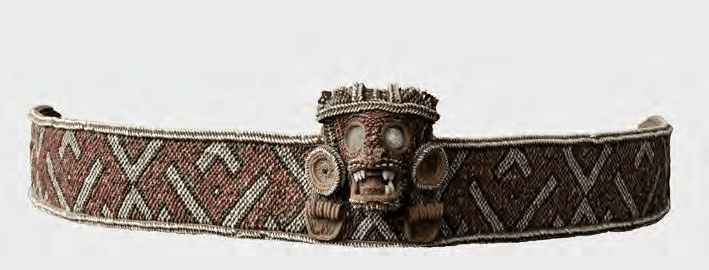
Anacaona's Gift: Cotton and the woven arts of the 11th to 17th century Caribbean by Joanna Ostapkowicz is a must-read for anyone interested in the material culture and history of the indigenous peoples of the Caribbean. Despite the paucity of extant materials made of cotton, the archival sources, Spanish chronicles, ethnographic analogies with South American peoples, and close analysis of ceramics and indigenous sculpture reveal often neglected aspects of Taino textile production and weaving traditions. Ostapkowicz presents compelling evidence for cotton production and weaving as one of great importance for the indigenous peoples economically, socially and politically and religiously. Cotton, as a source of material for wrapping cemis or for making hats, caps, naguas, masks, crowns, belts, capes, arm and leg bands, hammocks, burial shrouds, was undoubtedly a specialist activity for the most elaborate and best products. This made it an extension of cacical power or authority, particularly if the caciques controlled the storehouses where cotton was stored before redistributing it through their families, communities or other caciques. It is possible that elite women may have been the ones responsible for producing the best quality cotton goods, such as those using gold, shell, stone, feathers, and other products to produce refined cemis, belts, or elite regalia. Indeed, their elite status likely freed them from some of the other daily domestic duties of women who likely wove most of the cloth used by the indigenous societies of the island.
Much of the book analyzes closely each example or type of item made with or using cloth in so-called Taino and Kalinago cultures. This close analysis includes basketry, too, for additional examples of weaving use fiber materials. But the bulk of the analysis focuses on types of clothing and the application of cotton materials for wrapping or constructing materials like belts or cemi materials. The artistic and labor skills required to have produced some of the best examples must have been astonishing, which suggests there were specialized textile workers. Similarly, the production of the most elaborate stools (duhos) and platters or wooden objects similarly required experienced workers. Their close association with caciques, especially in the production of items and goods that, at their most refined level, were for elites, attests to a degree of power and hierarchy in the indigenous Caribbean chiefdoms more complex than many realize. Perhaps interpreting too literally Columbus and other chroniclers who often emphasized the nudity of the Taino, scholars have truly missed another dimension of the complex material culture. Indeed, some of these elaborate works featured thousands of beads, different weaving patterns, complex geometric patterns, and skillful use of gold or feathers. The arm bands, caps, skirts, and hammocks, sadly, have not survived, but the level of skill required to produce them (and in quantity) are a testament to the relatively high level of production.
An area not fully explored however, and this is due to our limited sources in terms of surviving artifacts, is the extent to which the entire population of the cacicazgo had access to certain goods, like hammocks. Moscoso, for example, seemed to think hammocks were not universally used by all Taino. Similarly, the shortages of hammocks and the importation of cloth from Europe (not enough in the early colonial period, but a source for hammocks for settlers who took to the hammock) deserves further inquiry. To what extent were indigenous weavers in Jamaica learning to make European-styled clothes? Was there an increase in the scale of production for the "market" during European colonial rule, despite the lack of interest by Spaniards for cotton plantations in places like Hispaniola? What about Xaragua, when its tribute to Columbus was in cotton and included extra cotton treasures give by Anacaona? In other words, what were the mechanisms for the increase in textile production before colonialism? Was Xaragua, already noted for its cotton, producing a surplus for trade with other parts of Hispaniola, Cuba, and Jamaica? And to what extent were Taino products possibly exported south to the Lesser Antilles or the South American mainland for items like guanin?
No comments:
Post a Comment